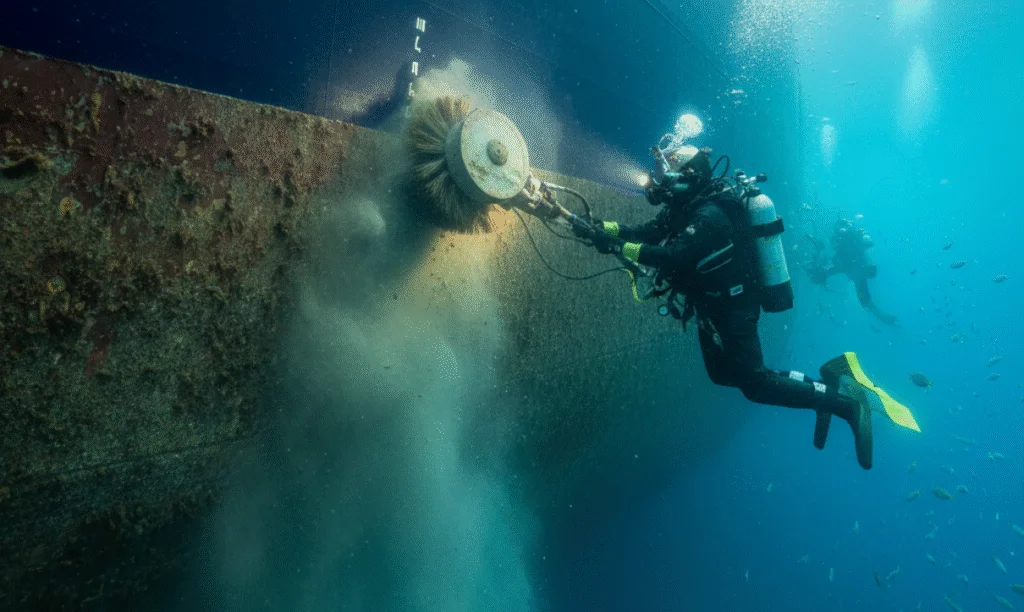
Every boater ends up here eventually. You’re about to launch, halfway through a trip, or facing unexpected performance issues, and you realize the hull needs attention right now. Emergency hull cleaning becomes the only option when growth, debris, or buildup creates drag, vibration, or cooling problems that you can’t ignore. Scheduled maintenance is ideal, but life doesn’t always line up that neatly.
Here’s the thing. Emergency cleaning isn’t about perfection. It’s about restoring safe performance quickly without damaging the hull in the rush. With the right approach, you can fix the immediate problem and buy yourself enough time to schedule a proper cleaning later.
Why Emergency Hull Cleaning Matters
When marine growth builds up faster than expected or debris wraps around key areas, your boat can lose speed, burn more fuel, overheat, or handle poorly. In severe cases, fouling affects water intakes, props, and stability. Addressing these problems quickly keeps your trip from turning into a headache — or worse, a breakdown.
Emergency hull cleaning gives you a way to restore function fast. The trick is knowing what you can safely clean right away and what needs a professional follow-up.
What Causes Sudden Need for Hull Cleaning
- Rapid algae or slime buildup in warm water
- Unexpected barnacle clusters forming between trips
- Debris snagged around intakes or props
- Long idle periods at marinas
- Launching in high-growth environments
- Travel to new waters with different conditions
Sometimes the hull looks fine at the dock, but the moment performance drops, you know something’s wrong underneath.
Tools for Emergency Hull Cleaning
You don’t need a full cleaning kit for an emergency. Just enough to deal with the immediate problem.
- Plastic scraper or putty knife
- Soft-bristle brush or medium-duty scrub pad
- Bucket of warm water
- Boat-safe cleaner or even diluted vinegar
- Microfiber cloths
- Dive mask and gloves if cleaning in the water
- Knife or line cutter for debris removal
The goal is quick solutions, not a showroom finish.
Emergency Hull Cleaning Methods
1. Surface Rinse and Quick Inspection
If you have hose access, start by rinsing the hull. Even a fast rinse clears loose debris and slime. You want to see where the real problem is before you start scrubbing.
If you’re already on the water, inspect from the deck or swim platform. Look for clumps near the waterline or anything caught around the prop.
2. In-Water Emergency Cleaning
If conditions are calm and you’re comfortable swimming, in-water cleaning can solve immediate issues.
- Wear gloves and use a mask.
- Use a soft brush to clear algae and slime.
- Use a plastic scraper for loose barnacles.
- Cut away any rope, weeds, or plastic around the prop.
Avoid aggressive scraping. You’re not aiming for perfection — just clearing the drag or blockage.
3. Clearing Debris From the Prop and Intakes
This is one of the most common emergency issues. A single plastic bag or weed clump can tank your performance.
- Shut off the engine completely.
- Check the prop blades for wrapped debris.
- Examine intake screens for blockage.
- Remove everything gently to avoid scratching metal surfaces.
Once cleared, performance often improves instantly.
4. Quick Dockside Cleaning for Heavy Growth
If your hull has rapid slime or algae buildup, dockside cleaning is the fastest fix.
- Use a medium scrub pad and warm water.
- Apply cleaner if you have it, but don’t let it dry in direct sun.
- Scrub in short, controlled passes.
- Rinse between sections to keep residue from spreading.
You’re buying time until a full wash — not stripping paint — so keep it gentle.
5. Trailer-Based Emergency Cleaning
If you’ve already hauled the boat out, trailer cleaning gives you the best access.
- Rinse immediately while the hull is still wet.
- Remove algae or slime with a brush.
- Scrape loose barnacles carefully with a plastic tool.
- Use diluted vinegar for early staining.
Don’t attack dried barnacles aggressively — they’ll need a proper cleaning later.
What Not to Do During Emergency Hull Cleaning
- Don’t use metal scrapers unless you’re trained and cleaning metal hulls.
- Don’t use harsh acids in a rush — they damage coatings fast.
- Don’t mix cleaners without knowing the reaction.
- Don’t pressure wash at close range on fiberglass or gelcoat.
- Don’t keep running the boat if performance issues continue.
Emergency fixes should stabilize the situation, not create a bigger repair bill.
How to Decide Whether You Can Handle the Emergency Yourself
Most emergency hull cleaning situations fall into three categories:
- Easy fixes: slime, weeds, rope around the prop
- Moderate fixes: fresh barnacles, early staining
- Professional only: heavy barnacle clusters, zebra mussels, deep staining, intake blockages, prop damage
If something looks severe or dangerous, don’t push it — call for help.
How to Prevent Future Hull Emergencies
The best emergency cleaning is avoiding emergencies altogether. Build a simple routine:
- Rinse after each outing
- Inspect the prop weekly
- Check water intakes before each launch
- Keep anti-fouling paint in good shape
- Lift or trailer the boat when you can
When you get ahead of growth, emergency situations become rare.
FAQs
Can I clean my hull while the boat is still in the water?
Yes, as long as conditions are safe and you use soft tools. It’s one of the fastest emergency cleaning methods.
What should I do if my prop is vibrating suddenly?
Stop the engine immediately and check for weeds, rope, or debris wrapped around the prop.
Is scraping barnacles safe in an emergency?
Only if they’re fresh and soft. Dry or mature barnacles should be handled by a pro later.
Need help fast?
If you’re facing a hull problem you can’t solve on the spot, check out our website for immediate assistance and professional emergency cleaning options.
