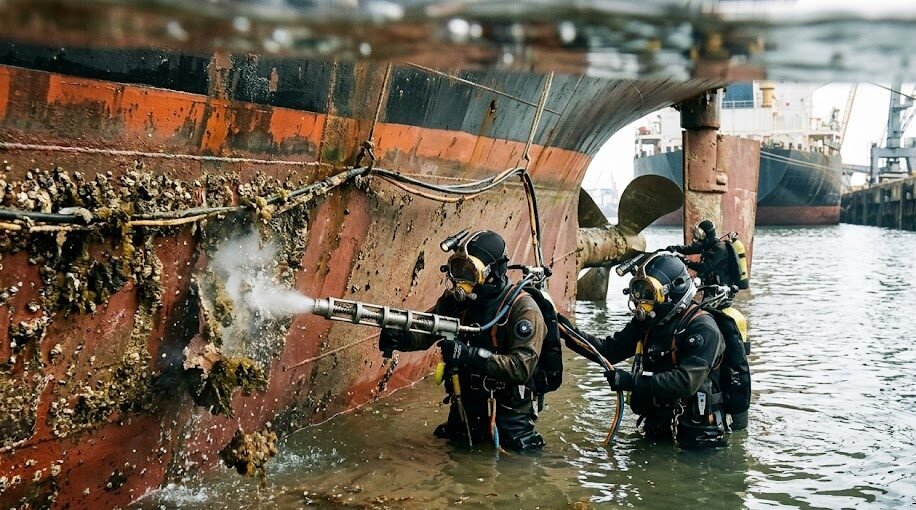
Commercial marina seawalls are constantly exposed to harsh marine conditions, including wave action, tidal fluctuations, saltwater corrosion, vessel impacts, and biological growth. Over time, these forces gradually weaken structural components, increasing the risk of costly repairs and operational disruptions. Implementing a proactive marina seawall maintenance program helps marina owners identify developing issues early, extend the service life of waterfront infrastructure, and protect valuable assets.
Routine underwater inspections, marine growth removal, and preventative maintenance play critical roles in preserving seawalls before minor deterioration becomes major structural failure.
What Is Marina Seawall Maintenance?
Marina seawall maintenance is the ongoing inspection, cleaning, repair, and monitoring of commercial seawalls, retaining walls, bulkheads, and supporting marine infrastructure. Proper maintenance identifies structural deterioration, marine growth, corrosion, concrete damage, and foundation issues before they compromise the seawall’s integrity.
A comprehensive maintenance program helps marina operators reduce repair costs while maintaining safe waterfront facilities for boat owners and visitors.
According to the World Association for Waterborne Transport Infrastructure (PIANC), routine inspection and preventative maintenance are fundamental to extending the lifespan of marine infrastructure and reducing lifecycle repair costs.
Why Commercial Marina Seawalls Deteriorate
Marine environments place constant stress on concrete, steel, timber, and reinforced seawall systems. Even well-constructed seawalls gradually experience wear from physical, chemical, and biological forces.
Common causes of deterioration include:
- Wave and wake impacts
- Saltwater exposure
- Corrosion of reinforcing steel
- Marine growth accumulation
- Scour around foundations
- Freeze-thaw cycles in certain climates
- Heavy vessel traffic
Without regular inspections, many of these problems remain hidden below the waterline until significant structural damage has already occurred.
Recognizing Commercial Dock Structural Failure
Commercial dock structural failure rarely occurs without warning. Early identification of deterioration allows marina operators to schedule repairs before safety or operational issues develop.
Warning signs may include:
- Cracked or displaced concrete panels
- Settlement behind the seawall
- Exposed reinforcing steel
- Loose dock connections
- Uneven walkways
- Bulging or leaning seawall sections
- Scour around structural supports
Prompt investigation helps determine whether cosmetic deterioration has progressed into structural damage.
How Seawall Marine Growth Affects Structural Integrity
Seawall marine growth consists of algae, barnacles, oysters, mussels, and other organisms that attach to submerged concrete and structural components.
Although marine growth does not necessarily cause structural failure by itself, excessive accumulation can:
- Conceal cracks and deterioration
- Hide exposed reinforcing steel
- Make underwater inspections more difficult
- Increase loading on certain structural elements
- Trap sediment against damaged surfaces
Removing marine growth improves inspection visibility and allows engineers and divers to accurately evaluate seawall condition.
The Importance of Retaining Wall Cleaning
Professional retaining wall cleaning removes biological growth and accumulated debris from submerged concrete surfaces without causing unnecessary damage.
Cleaning helps inspectors identify:
- Surface cracking
- Concrete spalling
- Joint separation
- Corrosion staining
- Foundation movement
- Exposed reinforcement
Professional Piling Cleaning and marine structure cleaning services improve visibility while supporting comprehensive inspection programs.
Understanding Concrete Seawall Degradation
Concrete seawall degradation develops gradually as seawalls age and remain exposed to moisture, chlorides, and repeated loading.
Common forms of deterioration include:
- Surface scaling
- Concrete spalling
- Cracking
- Reinforcing steel corrosion
- Joint deterioration
- Foundation settlement
Early intervention helps preserve structural integrity and often reduces long-term repair costs.
The Role of Underwater Inspections
Many critical seawall components remain permanently submerged, making professional underwater inspections essential.
Professional Underwater Inspection services evaluate:
- Submerged concrete condition
- Foundation stability
- Marine growth accumulation
- Scour around seawalls
- Structural cracking
- Joint integrity
- Damage from vessel impacts
Detailed inspection reports provide valuable documentation for maintenance planning, engineering evaluations, and repair prioritization.
Planning Marina Infrastructure Repair
Effective marina infrastructure repair begins with accurate assessment rather than emergency response.
A proactive maintenance strategy should include:
- Routine underwater inspections.
- Scheduled marine growth removal.
- Periodic structural engineering evaluations.
- Prompt repair of minor defects.
- Corrosion monitoring.
- Long-term maintenance planning.
Addressing deterioration early often reduces repair costs while minimizing disruptions to marina operations.
Supporting Long-Term Waterfront Maintenance
Piling Cleaning
Professional Piling Cleaning removes heavy marine growth that can conceal deterioration on structural supports and surrounding infrastructure.
Routine Underwater Inspections
Regular Underwater Inspection services provide ongoing monitoring of seawalls, pilings, docks, and other submerged marina assets.
Common Mistakes Marina Operators Make
- Waiting until visible structural damage appears before scheduling inspections.
- Allowing heavy marine growth to obscure submerged structures.
- Ignoring minor cracks or concrete spalling.
- Delaying repairs after vessel impact damage.
- Skipping routine underwater inspections.
- Relying solely on above-water visual inspections.
Frequently Asked Questions
How often should commercial marina seawalls be inspected?
Inspection frequency depends on seawall age, environmental conditions, vessel traffic, and local regulations. Routine underwater inspections help identify developing problems before they become significant structural issues.
Can marine growth damage a seawall?
Marine growth mainly obscures structural defects and makes inspections more difficult. While it does not necessarily cause structural failure directly, removing it improves visibility and helps identify deterioration early.
What causes concrete seawalls to fail?
Common causes include reinforcing steel corrosion, cracking, settlement, scour, vessel impacts, chloride exposure, and years of environmental wear.
Why are underwater inspections necessary?
Many critical structural components remain below the waterline, where damage cannot be identified during routine above-water inspections alone.
Can preventative maintenance reduce repair costs?
Yes. Routine inspections, cleaning, and timely repairs help detect minor issues before they develop into major structural failures requiring extensive reconstruction.
Looking for more expert marine infrastructure maintenance advice? Visit our blog for additional guides on seawalls, underwater inspections, dock maintenance, and commercial diving services.
Conclusion
Marina seawall maintenance is one of the most effective ways to protect commercial waterfront infrastructure from premature deterioration and structural failure. By combining routine underwater inspections, marine growth removal, retaining wall cleaning, and proactive repair planning, marina owners can preserve seawall integrity, improve safety, and reduce long-term maintenance costs. Investing in preventative maintenance today helps ensure reliable marina operations and extends the service life of valuable waterfront assets for years to come.
Ready to protect your marina infrastructure?
If you need expert help with seawall inspections or underwater maintenance, our team of certified divers and marine technicians is ready to assist. Learn more about our underwater inspection services here.
Prefer to speak with an expert immediately? Contact us today to schedule a service or request a free quote.
