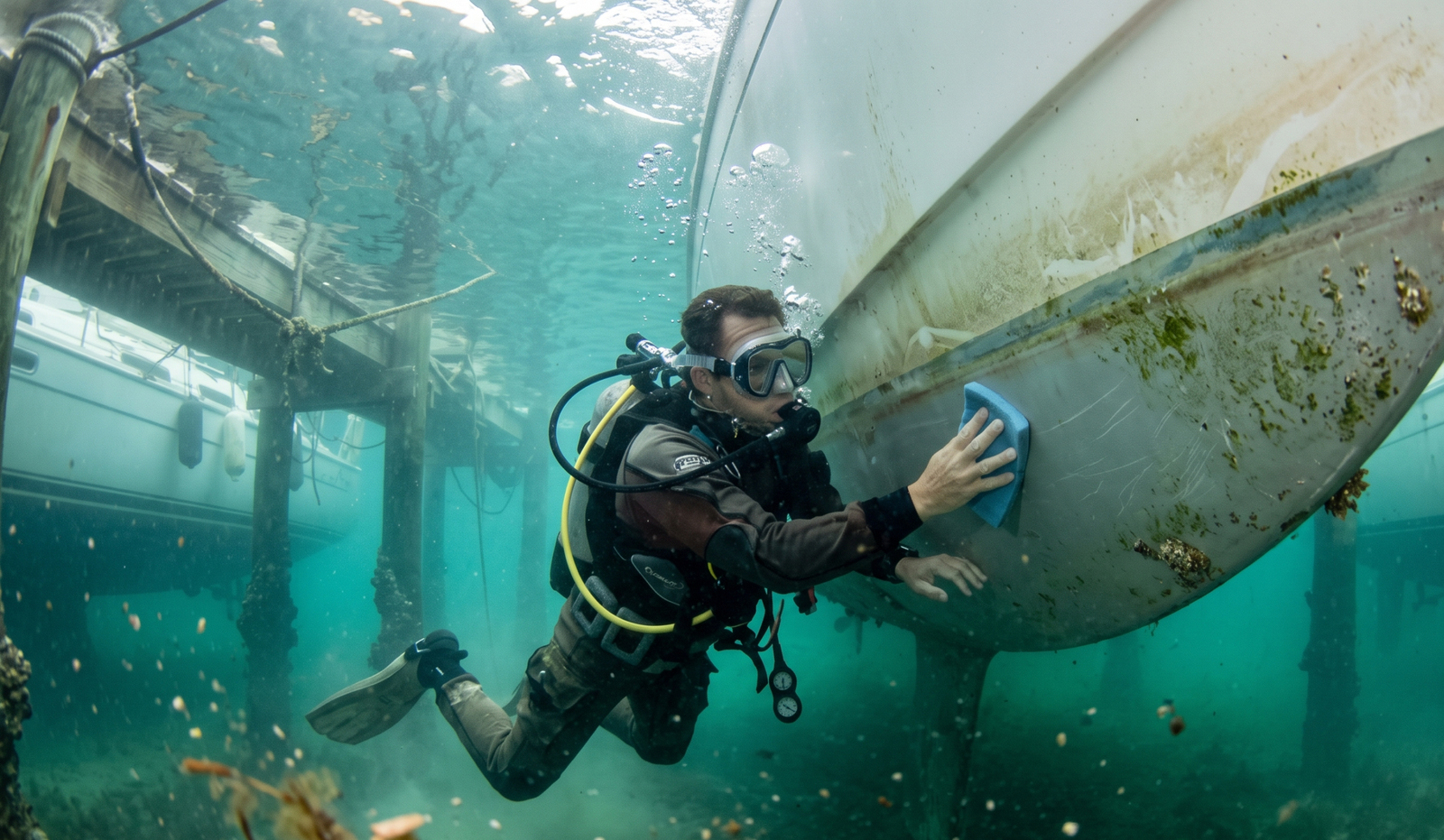
If you have invested in a copper-free antifouling system, the last thing you want is to damage the coating while trying to keep the hull clean. That frustration is common: a boat comes out of the water with slime, light algae, or early fouling, and the instinct is to scrub hard until everything looks spotless.
Copper-free antifouling cleaning should use the least aggressive method that removes the fouling without unnecessarily wearing the coating. That matters even more with modern biocide-free and silicone foul-release systems, where the surface itself is designed to make marine growth easier to release rather than kill it with a continuously leaching biocide.
International maritime guidance recognizes biocide-free foul-release coatings, including silicone-based systems, as a distinct approach to controlling underwater fouling. IMO anti-fouling systems guidance also explains the environmental concerns surrounding harmful antifouling substances and the international framework governing their use.
What Is Copper-Free Antifouling Cleaning?
Copper-free antifouling cleaning is the controlled removal of slime, algae, light fouling, and other deposits from an underwater coating without unnecessarily abrading, cutting, or stripping the coating itself. The correct cleaning method depends on the coating chemistry, surface condition, fouling pressure, and manufacturer’s maintenance instructions.
Copper-free does not automatically mean that every coating is identical. Some systems are biocide-free and rely on a hard surface, while others use silicone or another foul-release technology that makes organisms less able to adhere firmly to the hull.
For example, Hempel describes Silic One as a biocide-free silicone foul-release coating with a smooth, low-friction surface, while Seajet describes SEOSIL as a biocide-free silicone system intended to make fouling easier to release during vessel operation and gentle cleaning.
Why Copper-Free Bottom Paint Needs a Different Cleaning Approach
Traditional antifouling paints may depend on controlled biocide release. Copper-free systems can work differently.
A foul-release coating is designed to make attachment difficult and removal easier, so aggressive scrubbing can be counterproductive if it damages the coating’s surface.
The International Maritime Organization’s anti-fouling information distinguishes biocide-free foul-release systems from biocidal coatings. Silicone and similar foul-release technologies rely on surface properties rather than simply releasing a toxic substance into the surrounding water.
That distinction changes how we approach maintenance. Instead of asking, “How hard can I scrub?” the better question is, “What is the gentlest method that removes this level of fouling?”
Copper-Free Antifouling Cleaning Protocol
1. Identify the Coating Before Cleaning
Before putting a brush or cleaning tool against the hull, find out exactly what coating is installed.
Check the vessel’s maintenance records, coating specification, product label, technical data sheet, or yard documentation. This is particularly important if the boat has changed owners or has been repainted several times.
Do not assume that a copper-free coating can be maintained in the same way as the previous bottom paint.
2. Evaluate the Fouling
Look at what you actually need to remove.
- Light slime
- Soft algae
- Small patches of early growth
- Hard shell growth
- Barnacles
- Heavy weed growth
- Embedded contamination
Light slime requires a very different cleaning approach from mature barnacle colonies. Trying to remove heavy growth with excessive force can create more damage than the original fouling.
3. Start With Water
For compatible coatings, begin with a freshwater rinse or other manufacturer-approved low-impact cleaning method before escalating to mechanical cleaning.
Seajet’s SEOSIL guidance specifically recommends low-pressure freshwater rinsing and a soft sponge for residues. Hempel’s Silic One maintenance information likewise emphasizes cleaning the underwater area appropriately and rinsing with freshwater.
These recommendations illustrate the basic principle: remove loose contamination first instead of immediately attacking the coating mechanically.
4. Use a Soft Cleaning Tool
When manual cleaning is necessary, choose a tool appropriate for the coating.
A soft sponge or other manufacturer-approved cleaning implement may be enough for early fouling. Avoid automatically reaching for stiff brushes, abrasive pads, scrapers, or aggressive underwater cleaning equipment.
The harder the tool, the greater the risk of changing the coating surface rather than simply removing the fouling.
5. Never Treat Barnacles Like Ordinary Dirt
Hard shell growth presents a different problem. Barnacles can attach strongly, and forcing them off a delicate coating can pull away coating material along with the shell.
If hard fouling has become established, the safest approach may be to haul the vessel and follow the coating manufacturer’s approved preparation procedure rather than repeatedly attacking the surface underwater.
International Yacht Paint’s guidance for antifouling preparation, for example, emphasizes controlled washing, examination of the hull, and appropriate removal methods while warning against damaging the underlying coating system.
Cleaning Silicone Foul-Release Coatings
Silicone foul-release coatings generally benefit from gentle, regular cleaning rather than aggressive intermittent scrubbing. Their low-surface-energy characteristics make fouling easier to release, but they still require maintenance in areas with significant fouling pressure.
Seajet states that its SEOSIL system can be maintained with low-pressure freshwater rinsing and a soft sponge for residue. The manufacturer also recommends regular cleaning during the year in areas subject to fouling.
Hempel describes Silic One as a biocide-free silicone foul-release coating designed to prevent organisms from attaching firmly to underwater surfaces.
The exact cleaning method should always follow the technical data sheet for the coating actually installed on the vessel.
How Often Should Copper-Free Antifouling Be Cleaned?
There is no universal cleaning interval for copper-free antifouling. The appropriate frequency depends on the coating, water temperature, fouling pressure, vessel activity, location, and amount of growth appearing between inspections.
A yacht kept in warm, nutrient-rich coastal water can develop fouling much faster than a vessel operating in a colder or less productive environment.
International Yacht Paint’s B-Free Explore documentation makes the same practical point: cleaning frequency depends on regional fouling conditions, with more aggressive fouling areas requiring more frequent cleaning.
Instead of choosing an arbitrary monthly schedule, monitor the hull and establish an interval based on actual fouling behavior.
Why Over-Cleaning Can Damage a Biocide-Free Hull Coating
It is easy to assume that more cleaning means better protection. That is not necessarily true.
Every mechanical cleaning operation creates some opportunity for coating wear, so unnecessary cleaning can shorten the useful life of a coating system.
This is particularly relevant when the coating depends on a smooth surface for its foul-release properties. Scratches, exposed underlying layers, worn areas, or localized coating loss can change how the surface behaves.
If you are cleaning the hull frequently because growth returns almost immediately, that may be a sign that the existing coating system, vessel usage pattern, or local fouling conditions need to be reassessed.
Underwater Cleaning vs. Haul-Out Cleaning
Underwater cleaning can make sense for light fouling when the coating manufacturer permits it and the cleaning method is controlled. It is not automatically the best answer for every condition.
Underwater cleaning is most appropriate when the coating is suitable for it, fouling is manageable, and the cleaning method can be controlled without damaging the surface or releasing prohibited material into the water.
Heavy growth, damaged coating, uncertain coating identity, or extensive repairs may justify hauling the boat instead.
Before scheduling underwater cleaning, a professional underwater inspection can help determine whether the hull has coating damage, excessive fouling, or other underwater issues that need attention.
Environmental Considerations During Bottom Paint Cleaning
Copper-free and biocide-free coatings are often selected because owners want to reduce reliance on conventional biocidal antifouling technologies. That does not mean every cleaning activity is environmentally harmless.
Cleaning can release paint particles, coating residue, fouling organisms, and contaminated material into the surrounding water, so the method should comply with local environmental rules and the coating manufacturer’s instructions.
When a coating needs to be stripped or heavily abraded, containment and proper disposal become especially important. International Yacht Paint’s antifouling-removal guidance specifically calls for containment of wash water and residue and disposal according to local legislation.
For commercial operators, marinas, and boatyards, the environmental rules governing underwater cleaning can vary by jurisdiction. Always verify the applicable local requirements before conducting aggressive underwater cleaning.
Common Mistakes When Cleaning Copper-Free Antifouling
- Assuming every copper-free coating can be cleaned the same way.
- Using a stiff brush before identifying the coating.
- Scrubbing a foul-release coating simply to make it look perfectly clean.
- Using abrasive pads that can change the coating surface.
- Removing barnacles aggressively while the boat remains afloat.
- Ignoring the manufacturer’s maintenance instructions.
- Cleaning more frequently than the local fouling conditions require.
- Failing to inspect for coating damage after cleaning.
- Ignoring environmental requirements for underwater cleaning.
- Continuing to clean a severely fouled hull underwater when a controlled haul-out would be safer.
DIY vs. Professional Copper-Free Antifouling Cleaning
Owners can often handle light above-water cleaning and basic visual checks. Underwater cleaning is different.
Professional underwater cleaning becomes particularly useful when the hull is large, visibility is poor, fouling is established, the coating is expensive or specialized, or you need documentation of the coating’s condition.
A professional diver can clean and inspect the hull while identifying areas that need more than routine maintenance. If the hull has significant marine growth, a dedicated hull cleaning service can be paired with an inspection of running gear and underwater hardware.
Where growth is concentrated around difficult underwater components, cavitation cleaning may be an option for suitable surfaces and applications. The method should still be selected based on the coating and component manufacturer’s requirements.
Frequently Asked Questions
Can you clean copper-free antifouling underwater?
Yes, some copper-free and biocide-free coatings can be cleaned underwater, but the method depends on the coating. Soft fouling may be removed with low-impact methods, while aggressive scrubbing can damage some foul-release systems. Always confirm the coating manufacturer’s approved cleaning method and comply with local environmental requirements before underwater cleaning.
Is copper-free antifouling the same as biocide-free antifouling?
No. “Copper-free” only tells you that copper is not being used as the antifouling biocide. A copper-free product can still contain another biocide. A biocide-free coating does not rely on a biocidal active ingredient and may instead use foul-release or other physical surface properties to control fouling.
Can you pressure wash silicone foul-release coatings?
Pressure washing should only be performed at settings and distances approved for the specific coating. Some silicone systems are designed for low-pressure freshwater rinsing, while excessive pressure can damage or prematurely wear the surface. Follow the product’s technical data sheet rather than applying a generic pressure-washing setting.
How often should a biocide-free hull coating be cleaned?
The interval depends on local fouling conditions, coating type, vessel use, and the amount of growth appearing on the hull. High-fouling regions may require more frequent cleaning. Regular monitoring is better than relying on one universal schedule because fouling rates vary substantially between locations.
What should you do if barnacles are attached to a copper-free coating?
Do not automatically scrape them aggressively underwater. Hard fouling can pull coating material from the hull or damage the underlying system. Evaluate the coating manufacturer’s approved removal procedure and consider a controlled haul-out if the growth is extensive or firmly attached.
Are copper-free antifouling coatings environmentally friendly?
Some copper-free coatings are also biocide-free and are designed to reduce reliance on biocidal fouling-control chemistry. However, “copper-free” does not automatically mean “non-toxic” or environmentally harmless. Check the product formulation, regulatory status, safety documentation, and local cleaning requirements before making environmental claims about a specific coating.
For more practical marine maintenance guidance, read our other marine maintenance and underwater service articles.
Conclusion
Copper-free antifouling cleaning works best when you match the cleaning method to the coating instead of treating every bottom paint like conventional hard antifouling. Start gently, identify the coating, remove loose contamination before applying mechanical force, and inspect the surface after cleaning.
For silicone foul-release and other biocide-free systems, regular low-impact maintenance can help preserve the coating while controlling early fouling. When growth becomes heavy or the coating condition is uncertain, professional inspection and controlled cleaning can prevent a simple maintenance job from becoming an expensive coating repair.
Ready to protect your vessel?
If you need expert help with this, our team of certified divers and marine technicians is ready to step in. Learn more about our specific services here.
Prefer to speak with an expert immediately? Contact us today to schedule a service or get a free quote!
