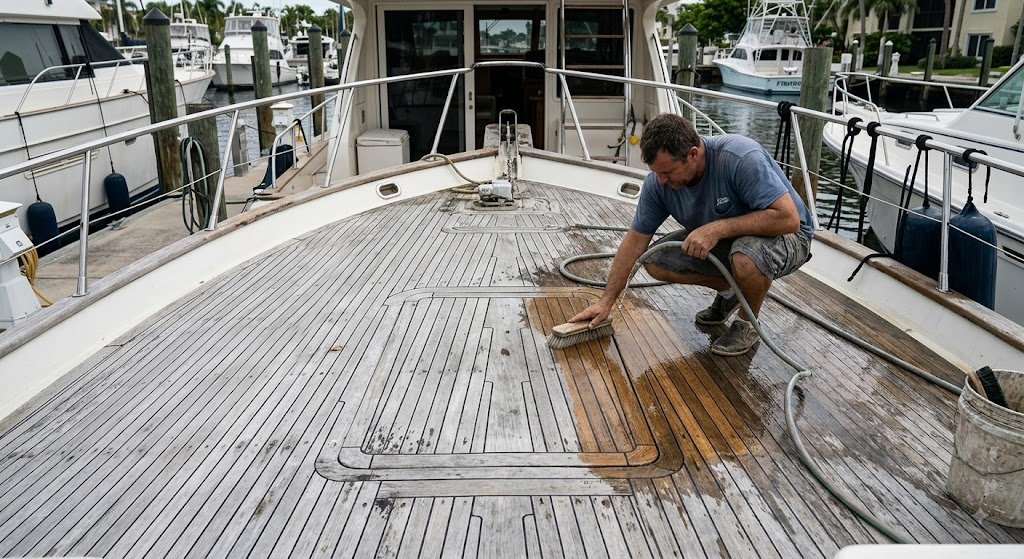
A teak deck can make an older yacht look beautifully maintained, but it can also show neglect quickly. After weeks in a marina, the warm brown color can turn silver-gray, dirt settles into the grain, mildew darkens the seams, and repeated scrubbing can leave the surface looking rough. If you want to restore marine teak without wearing away the wood that makes the deck valuable, the cleaning method matters as much as the product.
Good teak maintenance is not about making the deck look new at any cost. It is about removing salt, dirt, stains, and biological growth while preserving the wood fibers, caulking, traction, and remaining deck thickness.
What Is Teak Deck Cleaning?
Teak deck cleaning is the controlled removal of salt, dirt, mildew, stains, and surface contamination from marine teak using a suitable cleaner, soft brush, and thorough freshwater rinsing. Proper cleaning removes contamination without unnecessarily stripping wood fibers, damaging caulk seams, or shortening the useful life of the deck.
Teak decking systems are exposed to sunlight, saltwater, rain, foot traffic, and marina pollution every day. A gentle maintenance routine is therefore much safer than waiting for heavy discoloration and then trying to restore the entire deck with aggressive chemicals or abrasion.
Teakdecking Systems’ cleaning guidance recommends marine-specific cleaners and soft-bristle brushing along the grain while warning against harsh acid cleaners, bleach, and aggressive pressure washing.
Why Teak Turns Gray
A grey teak boat deck is not automatically a damaged deck. Natural weathering causes exposed teak to lose its warmer color and develop a silver-gray appearance. Many owners actually prefer this traditional weathered finish because it avoids frequent coatings and retains the natural look of the wood.
The problem starts when gray weathering is mixed with dirt, mildew, organic contamination, or uneven cleaning. That can make the deck look blotchy and can accelerate surface wear when owners try to correct it with excessive scrubbing.
If you want the silver-gray appearance, the maintenance objective is simple: keep the surface clean and even. If you want the warmer golden color, you need a more deliberate brightening and protection routine.
How to Brighten Boat Wood Without Damaging It
To brighten boat wood safely, clean the teak with a marine-specific cleaner, use a soft brush in the direction of the grain, rinse thoroughly, and use a suitable brightening or protective treatment when needed. Avoid aggressive cross-grain scrubbing because it can lift softer wood fibers and leave the surface rougher.
The basic process is straightforward, but technique makes a major difference.
1. Rinse Away Loose Salt and Dirt
Start with fresh water. Salt crystals, sand, and grit can act like abrasives when you scrub them into the surface. Removing loose contamination first makes the subsequent cleaning gentler.
2. Work in Manageable Sections
Do not cover the entire deck with cleaner and then leave it sitting while you move around the boat. Work in sections so the cleaning solution does not dry onto the teak.
3. Scrub With the Grain
Safe teak scrubbing means following the direction of the teak planks rather than scrubbing across them. Use a soft-bristle brush and moderate pressure.
Teakdecking Systems specifically recommends working along the grain and avoiding practices that unnecessarily remove soft wood fibers. Its current maintenance guidance also identifies gentle regular cleaning as a core part of extending teak deck life.
4. Rinse Thoroughly
After cleaning, rinse the deck completely with fresh water. Cleaner residue should not be allowed to remain in the wood or around the caulk seams.
Advanced Teak Cleaning for Heavy Staining
Some decks need more than a routine wash. Fish blood, rust, mildew, oil, algae, and other organic stains can penetrate the surface and become harder to remove if they are ignored.
For heavily weathered teak, a stronger marine cleaner may be appropriate, but the product should still be compatible with teak and the deck’s caulking system.
Teakdecking Systems ECO-300, for example, is formulated for deeper cleaning of teak and composite decks and is designed to be used without harsh chemicals that can damage teak or caulking.
For isolated stains, spot treatment is often better than repeatedly deep-cleaning the entire deck. This limits unnecessary wear on areas that are already clean.
Teak Oil vs Sealer: Which Should You Use?
Teak oil and teak sealers serve different maintenance goals. Oil is commonly chosen to enrich teak’s appearance and give it a warmer, more natural finish, while a penetrating sealer can provide UV and weather protection while helping maintain a more consistent color. Neither is mandatory if you prefer naturally weathered silver-gray teak.
| Maintenance Choice | Best For | Considerations |
|---|---|---|
| Natural weathering | Owners who prefer silver-gray teak | Requires regular gentle cleaning |
| Teak oil | Warmer color and enhanced grain | Requires periodic reapplication |
| Penetrating teak sealer | Color preservation and UV protection | Apply to clean, dry teak according to product instructions |
West Marine’s current teak-oil guidance notes that oil can provide a warmer, natural appearance without the high-gloss maintenance associated with varnish.
Meanwhile, Teakdecking Systems’ sealer guidance describes penetrating sealer as an optional way to preserve teak’s warmer color and provide UV protection. The choice ultimately depends on whether you want natural weathering or a maintained golden appearance.
Why Pressure Washing Can Be a Problem
Pressure washing is tempting when a teak deck has turned dark and dirty. The immediate result can look impressive, but excessive pressure can remove softer wood fibers and leave the surface uneven.
It can also affect the bond and condition of caulking seams. Teakdecking Systems’ current maintenance guidance recommends avoiding high-pressure washing and specifically warns that excessive pressure can open the wood grain and weaken caulk adhesion.
If pressure equipment is used at all, follow the deck manufacturer’s recommendations and use the lowest effective pressure rather than trying to strip the surface clean in one pass.
Protecting Teak Caulking While Cleaning
A teak deck is more than wood planks. The caulk seams between those planks form a critical part of the deck system, and damaged seams can allow water to reach the substrate underneath.
During cleaning, inspect for:
- Cracked caulk
- Caulk pulling away from plank edges
- Sunken seams
- Hard or brittle sealant
- Gaps around fittings
- Areas where water appears to track beneath the deck
If you find deteriorated seams, cleaning should not be treated as the complete repair. Professional assessment and timely re-caulking may be necessary to prevent further water intrusion.
When to Restore Marine Teak Professionally
There is a point where repeated DIY cleaning becomes counterproductive. If the teak is heavily worn, deeply stained, unevenly sanded, or has failing seams, aggressive cleaning can remove more of the remaining wood without addressing the underlying problem.
Professional help makes sense when:
- The deck has severe weathering or uneven wear.
- Deep stains remain after appropriate cleaning.
- Caulking is cracking or separating.
- The surface has been damaged by previous pressure washing.
- You are preparing the vessel for sale.
- A large teak deck requires consistent restoration across multiple areas.
A professional Boat Wash & Detailing service can help maintain the rest of the vessel while teak specialists address the deck itself.
Maintenance Schedule for a Teak Boat Deck
A consistent schedule is easier on teak than occasional aggressive restoration.
- After saltwater use: Rinse the deck with fresh water when practical.
- During the boating season: Perform gentle routine cleaning as contamination builds.
- When stains appear: Treat them promptly rather than repeatedly scrubbing the entire deck.
- Seasonally: Inspect the deck surface and caulking carefully.
- When using a sealer: Reapply according to the product’s instructions and your local UV exposure.
Teakdecking Systems’ 2026 maintenance guide recommends regular gentle cleaning, periodic sealing when desired, and annual inspection of caulk seams as part of a structured maintenance routine.
Common Mistakes With Teak Deck Cleaning
- Scrubbing aggressively across the grain.
- Using household bleach or harsh detergents.
- Applying strong acid-based cleaners without understanding their effect on teak and caulking.
- Using stiff metal or overly abrasive brushes.
- Pressure washing at excessive pressure.
- Trying to remove every trace of natural gray weathering.
- Applying oil or sealer over a dirty or damp deck.
- Ignoring deteriorating caulk seams because the wood still looks attractive.
Frequently Asked Questions
How do you safely clean a teak boat deck?
Safely clean a teak boat deck by rinsing away loose salt and grit, applying a suitable marine teak cleaner, scrubbing gently with a soft brush along the grain, and rinsing thoroughly with fresh water. Avoid aggressive cross-grain scrubbing, harsh chemicals, and excessive pressure that can remove soft wood fibers or damage caulking.
Can a gray teak deck be restored to its original color?
Weathered teak can often be brightened and returned to a warmer appearance through appropriate cleaning and treatment, but natural weathering is not necessarily damage. If you prefer silver-gray teak, regular gentle cleaning may be all that is needed rather than trying to restore the original golden color.
Is teak oil better than a teak sealer?
Neither is universally better. Teak oil is often selected to enrich color and grain, while a penetrating sealer can provide UV and weather protection with less emphasis on an oily finish. The best choice depends on whether you want a natural gray appearance, warmer color, or additional surface protection.
Can I pressure wash a teak deck?
Pressure washing should be approached cautiously because excessive pressure can remove softer teak fibers, open the wood grain, and affect caulk adhesion. If pressure equipment is permitted by the deck manufacturer, use conservative settings and a suitable fan nozzle rather than aggressively stripping the surface.
How often should a teak boat deck be cleaned?
Cleaning frequency depends on climate, boat use, salt exposure, foot traffic, and biological growth. Regular gentle rinsing and cleaning during the boating season are generally preferable to waiting until the deck is heavily stained and then using aggressive restoration methods.
For more practical guidance on yacht care, marine maintenance, and professional vessel services, visit our blog and marine resources.
Conclusion
Teak deck cleaning works best when you treat the wood as a valuable structural and cosmetic surface rather than something that needs to be aggressively scrubbed back to new. Gentle cleaning along the grain, careful stain treatment, sensible brightening, and regular caulk inspection can keep a teak deck attractive without unnecessarily wearing away its fibers. Whether you prefer a natural gray finish or want to restore marine teak to a warmer color, the safest approach is consistent maintenance rather than repeated heavy restoration.
Ready to protect your vessel?
If you need expert help with this, our team of certified divers and marine technicians is ready to step in. Learn more about our specific services here.
Prefer to speak with an expert immediately? Contact us today to schedule a service or get a free quote!
