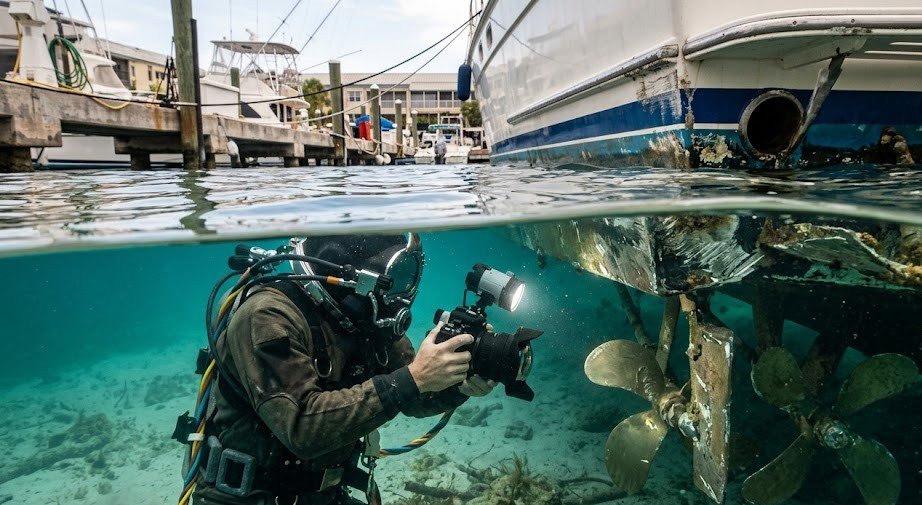
Running aground is one of the most common boating incidents in South Florida. Shallow sandbars, coral reefs, submerged rocks, and rapidly changing tidal conditions can cause unexpected groundings even for experienced captains. While some incidents appear minor from above the waterline, significant structural damage often remains hidden beneath the surface. A professional post-grounding boat inspection helps identify underwater damage before it develops into costly repairs or serious safety concerns.
Whether your vessel has contacted a sandbar in Biscayne Bay, struck a coral reef in the Florida Keys, or grounded in an Intracoastal Waterway channel, a timely underwater survey provides valuable information about the condition of your hull and propulsion system.
What Is a Post-Grounding Boat Inspection?
A post-grounding boat inspection is a comprehensive underwater assessment performed after a vessel runs aground to evaluate the hull, propellers, shafts, rudders, trim tabs, keels, through-hull fittings, and other submerged components for structural damage. The inspection documents visible damage, identifies safety concerns, and helps determine whether additional repairs or haul-out inspections are necessary.
Even when a boat appears to operate normally after a grounding, hidden underwater damage may still exist.
According to the U.S. Coast Guard Boating Safety Division, vessels involved in collisions or groundings should be inspected before returning to regular operation to identify damage that may affect seaworthiness.
Why Groundings Are Common in South Florida
South Florida offers exceptional boating opportunities, but its waterways also present numerous navigation hazards.
Common grounding locations include:
- Shallow sandbars
- Coral reef systems
- Tidal flats
- Seagrass beds
- Poorly marked channels
- Changing shoals
Variable tides and unfamiliar waterways increase the likelihood of accidental groundings, particularly for visiting boaters.
Reef Strike Damage Can Be More Serious Than It Appears
Reef strike damage often affects more than the visible hull surface. Coral formations can create concentrated impact forces that damage multiple underwater components simultaneously.
Potential damage includes:
- Hull gouges
- Gelcoat fractures
- Keel damage
- Bent propellers
- Damaged rudders
- Misaligned shafts
- Compromised through-hull fittings
Because coral reefs are environmentally protected throughout much of South Florida, vessel operators should also comply with any applicable reporting or environmental requirements after a reef impact.
The Florida Department of Environmental Protection (FDEP) provides guidance on protecting Florida’s coral reef ecosystems and responding to vessel groundings in sensitive marine habitats.
Sandbar Grounding Inspection: Hidden Risks
Many boat owners assume soft-bottom groundings cause little or no damage. However, a sandbar grounding inspection frequently reveals issues that are not immediately obvious.
Possible findings include:
- Sand-packed cooling intakes
- Propeller edge damage
- Scored lower units
- Bent trim tabs
- Hull abrasions
- Drive unit impacts
Even relatively soft groundings can affect propulsion performance if underwater components absorb significant impact forces.
What Divers Inspect Below the Waterline
Professional divers perform a systematic evaluation of all accessible underwater components.
A typical inspection includes:
- Hull bottom
- Keel
- Propellers
- Shafts
- Rudders
- Trim tabs
- Stabilizers
- Through-hull fittings
- Running gear
- Sacrificial anodes
Professional Underwater Inspection services document visible damage with photographs and provide recommendations regarding additional repairs or haul-out inspections.
Recognizing Underwater Hull Damage
Underwater hull damage may not always produce immediate symptoms above the waterline. Routine inspections after a grounding help identify hidden structural problems before they worsen.
Inspectors commonly look for:
- Gelcoat cracking
- Fiberglass delamination
- Impact fractures
- Hull deformation
- Protective coating damage
- Evidence of water intrusion
Early detection often reduces repair costs while improving vessel safety.
What to Do After Running Aground in Florida
If you experience running aground Florida waters, taking the right steps immediately afterward helps protect both your vessel and its occupants.
- Stop the engines if continued operation may cause additional damage.
- Check for water intrusion or flooding.
- Inspect the bilge.
- Record the location of the grounding.
- Arrange a professional underwater inspection.
- Notify your insurance provider if damage is suspected.
Avoid operating the vessel at high speed until underwater components have been evaluated.
Why a Boat Grounding Assessment Matters
A professional boat grounding assessment provides valuable information for owners, repair facilities, and insurance companies.
Inspection reports often include:
- Photographic documentation
- Damage descriptions
- Propulsion system observations
- Hull condition
- Recommendations for repairs
- Haul-out recommendations when necessary
Timely documentation also supports insurance claims by establishing the vessel’s condition soon after the incident.
Preventative Maintenance After Repairs
Once repairs are complete, ongoing maintenance helps restore performance and reduce future problems.
Hull Cleaning
Professional Hull Cleaning removes marine growth while allowing divers to monitor repaired areas.
Cavitation Cleaning
Professional Cavitation Cleaning safely restores propellers and underwater running gear after repairs.
Zinc Replacement
Routine Zinc Replacement helps protect underwater metals from galvanic corrosion following repairs or component replacement.
Common Mistakes After a Grounding
- Continuing to operate the vessel without inspection.
- Assuming soft sand causes no damage.
- Ignoring minor vibration after the incident.
- Waiting weeks before documenting underwater damage.
- Overlooking damaged propellers or shafts.
- Skipping insurance documentation.
Frequently Asked Questions
Should I inspect my boat after a minor grounding?
Yes. Even low-speed groundings can damage propellers, running gear, cooling intakes, or the hull below the waterline without producing obvious symptoms.
Can a sandbar damage my boat?
Yes. Sandbars can damage propellers, lower units, trim tabs, cooling intakes, and hull coatings, particularly if the boat strikes at speed or continues operating while grounded.
What happens during a post-grounding underwater inspection?
Professional divers inspect the hull, propellers, shafts, rudders, trim tabs, through-hull fittings, and other underwater components while documenting visible damage with photographs.
Will an underwater inspection support an insurance claim?
Yes. Inspection reports provide objective documentation that may assist insurance adjusters and repair facilities in evaluating the extent of damage.
How soon should I schedule an inspection after running aground?
The inspection should be arranged as soon as it is safe to do so. Prompt documentation helps identify hidden damage early and supports any necessary insurance or repair processes.
Looking for more expert boating maintenance advice? Visit our blog for additional guides on underwater inspections, hull protection, and professional diving services.
Conclusion
Post-grounding boat inspections play a critical role in protecting both your vessel and your investment after an unexpected grounding. Whether the incident involved a coral reef, sandbar, or shallow channel in South Florida, a professional underwater survey can identify hidden structural damage before it becomes a major repair. Combined with timely documentation and ongoing preventative maintenance, these inspections help restore confidence that your boat is ready to return to the water safely.
Ready to protect your vessel?
If you need expert help after a grounding, our team of certified divers and marine technicians is ready to assist. Learn more about our underwater inspection services here.
Prefer to speak with an expert immediately? Contact us today to schedule a service or request a free quote.
