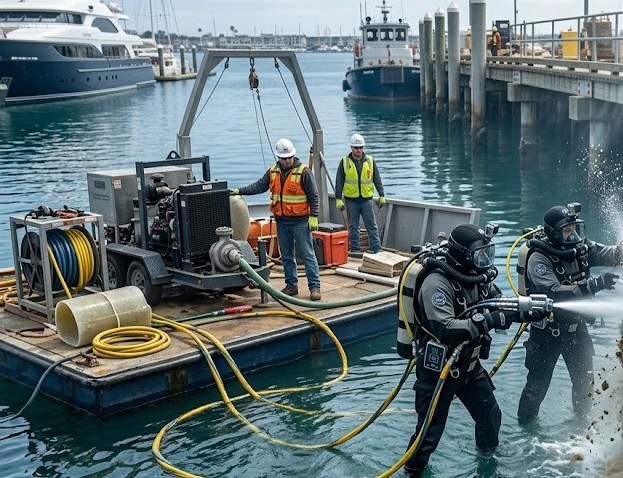
Epoxy pile jackets have become one of the most effective solutions for extending the life of damaged marine pilings. Whether protecting timber, concrete, or steel structures, these restoration systems help reinforce deteriorated piles, reduce further environmental damage, and restore structural integrity without requiring full replacement.
However, even the most advanced repair materials can fail if the surface beneath them is not properly prepared. This is why experienced marine contractors insist on thoroughly cleaning and inspecting a piling before any restoration work begins.
The process to prep piling for epoxy jacket installation is not simply a recommendation—it’s a critical requirement for achieving proper adhesion, long-term durability, and successful structural repairs. Marine growth, loose material, sediment, and contamination can all compromise the effectiveness of a piling restoration system.
Understanding why surface preparation matters can help property owners make better decisions when planning dock, marina, seawall, and waterfront infrastructure repairs.
What Is an Epoxy Pile Jacket?
An epoxy pile jacket is a protective structural repair system installed around a damaged piling.
These systems are commonly used to restore:
- Concrete pilings
- Timber piles
- Steel support piles
- Marine dock structures
- Pier foundations
- Waterfront support systems
Depending on the design, the jacket may be filled with grout, epoxy compounds, or other structural repair materials that strengthen and protect the pile.
When properly installed, epoxy jackets can significantly extend the service life of marine infrastructure.
Why Surface Preparation Determines Repair Success
Every repair system relies on one fundamental principle: adhesion.
For a jacket system to perform as intended, repair materials must bond securely to the underlying substrate.
If contaminants remain on the pile surface, the bond may be weakened.
This can lead to:
- Reduced structural performance
- Premature repair failure
- Water intrusion
- Delamination
- Shortened service life
That is why contractors place such strong emphasis on proper cleaning before installation begins.
Why Marine Growth Must Be Removed First
Marine structures naturally accumulate biological growth over time.
Common fouling organisms include:
- Barnacles
- Algae
- Mussels
- Tubeworms
- Marine slime
- Biofilms
These materials create barriers between the repair system and the piling surface.
When contractors prep piling for epoxy jacket installation, complete growth removal is often one of the first steps in the process.
Even small remnants of fouling can interfere with adhesion and compromise repair quality.
The Importance of Clean Pile Before Jacket Installation
The phrase clean pile before jacket installation is more than a construction guideline—it is a fundamental requirement for successful marine repairs.
A properly cleaned piling allows contractors to:
- Evaluate actual damage conditions
- Identify hidden defects
- Achieve proper bonding
- Improve repair longevity
- Ensure jacket alignment
Without a clean surface, it becomes difficult to accurately assess the condition of the underlying structure.
How Hidden Damage Is Often Discovered During Cleaning
One of the major benefits of thorough cleaning is that it exposes deterioration that may otherwise remain hidden.
Marine growth often conceals:
- Concrete spalling
- Exposed reinforcement
- Timber decay
- Corrosion
- Cracks
- Section loss
Cleaning allows engineers and contractors to evaluate the true condition of the pile before repairs are designed.
Preparing Concrete Piles for Restoration
Many projects involving piling restoration concrete wrap systems begin with concrete surface preparation.
Concrete pilings commonly experience:
- Spalling
- Rebar corrosion
- Cracking
- Surface scaling
- Marine growth accumulation
Before a restoration jacket is installed, contractors typically remove loose materials and contaminants to expose sound concrete.
This preparation helps create a stronger interface between the repair system and the pile.
Preparing Timber Piles for Jacket Installation
Timber structures present their own unique challenges.
Wood pilings may be affected by:
- Marine borers
- Shipworm activity
- Gribble damage
- Surface erosion
- Biological growth
Cleaning helps determine whether the remaining wood retains sufficient structural integrity to support rehabilitation.
In many cases, cleaning is essential before decisions can be made regarding repair or replacement.
How Cleaning Supports Structural Dock Pile Repairs
Projects intended to repair structural dock pile systems depend on accurate condition assessments.
Cleaning provides visibility needed to evaluate:
- Pile dimensions
- Damage severity
- Material loss
- Structural capacity
- Repair feasibility
Without proper cleaning, critical defects may remain concealed until after repairs have begun.
Common Cleaning Methods Used Before Jacket Installation
Marine contractors use several techniques to prepare piling surfaces.
| Cleaning Method | Primary Purpose |
|---|---|
| Marine Growth Removal | Expose structural surfaces |
| Pressure Washing | Remove loose contaminants |
| Cavitation Cleaning | Reduce fouling with minimal abrasion |
| Mechanical Cleaning | Remove stubborn deposits |
| Surface Preparation Tools | Create suitable bonding surfaces |
The appropriate approach depends on the pile material, environmental conditions, and repair specifications.
Consequences of Poor Surface Preparation
Skipping or minimizing cleaning steps can create significant risks.
Potential consequences include:
- Bond failures
- Water infiltration
- Reduced repair lifespan
- Structural performance issues
- Higher maintenance costs
In severe cases, repair systems may require premature replacement.
Why Underwater Inspections Are Often Performed First
Before restoration planning begins, underwater inspections frequently help establish baseline conditions.
Professional divers can identify:
- Growth accumulation
- Damage locations
- Pile deterioration
- Structural concerns
- Cleaning requirements
These inspections help contractors develop more accurate repair plans and cost estimates.
The American Society of Civil Engineers emphasizes the importance of inspection and maintenance programs for marine infrastructure.
Piling Restoration Concrete Wrap Systems Depend on Adhesion
Modern piling restoration concrete wrap technologies are designed to strengthen damaged structures and protect them from further deterioration.
However, the effectiveness of these systems depends heavily on:
- Proper cleaning
- Sound substrate conditions
- Accurate installation
- Quality materials
Even advanced repair products cannot compensate for poor surface preparation.
Best Practices Before Installing Epoxy Jackets
- Perform underwater inspections
- Remove all marine growth
- Expose sound structural material
- Document existing damage
- Verify pile dimensions
- Address loose materials
- Follow manufacturer specifications
These steps help maximize repair performance and service life.
Common Mistakes Property Owners Make
Assuming Marine Growth Is Harmless
Even thin layers of fouling can interfere with adhesion and conceal structural defects.
Skipping Pre-Repair Inspections
Unknown damage conditions often lead to unexpected repair costs.
Focusing Only on Visible Areas
Critical deterioration frequently occurs below the waterline.
Rushing Surface Preparation
Proper cleaning is one of the most important stages of any restoration project.
Delaying Repairs Too Long
Early intervention generally produces more cost-effective outcomes.
Frequently Asked Questions
Why is it important to prep piling for epoxy jacket installation?
Proper preparation removes contaminants, exposes damage, and helps ensure strong adhesion between the repair system and the piling.
Why must contractors clean pile before jacket installation?
Cleaning removes marine growth and debris that can interfere with bonding and conceal structural defects.
What is a piling restoration concrete wrap?
It is a structural repair system designed to strengthen and protect deteriorated concrete pilings in marine environments.
Can marine growth affect epoxy jacket performance?
Yes. Marine growth can prevent proper adhesion and reduce the effectiveness of the repair system.
How do contractors repair structural dock pile damage?
Repair methods vary depending on pile condition but often involve cleaning, inspection, reinforcement, and protective jacket installation.
Are underwater inspections necessary before repairs?
In many cases, inspections help identify hidden damage and determine the most appropriate restoration strategy.
Conclusion
Successful marine piling restoration begins long before the jacket is installed. The decision to properly prep piling for epoxy jacket installation directly affects adhesion, durability, and long-term repair performance. Whether working with timber, steel, or concrete structures, contractors understand that a clean pile before jacket installation provides the foundation for a successful project.
From exposing hidden deterioration to supporting effective piling restoration concrete wrap systems, thorough cleaning remains one of the most important steps in any effort to repair structural dock pile damage. Investing in proper preparation today can help extend structural life and reduce future maintenance costs for years to come.
Schedule a Professional Piling Inspection and Cleaning Service
If your dock, marina, seawall, or waterfront structure is being considered for pile restoration, professional underwater inspection and cleaning services can help prepare the project for success. Contact an experienced marine infrastructure specialist today to evaluate piling conditions, remove marine growth, and ensure your repair system starts with a properly prepared surface.
