Corrosion, impact damage, fatigue, and normal wear gradually affect every vessel operating in the marine environment. While many problems are visible during routine inspections, hidden deterioration beneath coatings or inside steel plating can remain undetected until it becomes a costly repair or a serious safety concern. That’s why marine non-destructive testing has become an essential part of modern vessel maintenance, allowing inspectors to evaluate hull condition without cutting, drilling, or damaging the structure.
From commercial workboats and cargo vessels to steel yachts and offshore support vessels, non-destructive testing helps owners identify structural issues early, improve maintenance planning, and extend the service life of their vessels.
What Is Marine Non-Destructive Testing?
Marine non-destructive testing (NDT) is a collection of inspection methods used to evaluate a vessel’s hull, welds, and structural components without causing damage. Techniques such as ultrasonic thickness testing, visual inspections, magnetic particle testing, and dye penetrant inspections help detect corrosion, metal loss, cracking, and structural defects while allowing the vessel to remain intact.
Unlike destructive testing, NDT preserves the structure being inspected, making it ideal for routine maintenance, insurance surveys, and regulatory compliance.
The International Maritime Organization (IMO) emphasizes regular vessel inspections and preventative maintenance to support safe ship operations and structural integrity.
Why Hull Integrity Matters
A vessel’s hull is its primary structural barrier against the marine environment. Even small amounts of corrosion or metal loss can reduce structural strength over time, particularly on steel and aluminum vessels operating in saltwater.
Common causes of hull deterioration include:
- Corrosion
- Marine electrolysis
- Galvanic corrosion
- Mechanical impact damage
- Metal fatigue
- Abrasion
- Poor maintenance
Routine inspections allow owners to identify these issues before repairs become significantly more expensive.
What Is an NDT Hull Inspection?
An NDT hull inspection combines visual examination with specialized testing equipment to evaluate the condition of hull plating, welds, structural framing, and underwater components. Inspectors use different techniques depending on the vessel’s construction material and the type of defect being investigated.
Typical inspection objectives include:
- Detecting corrosion
- Measuring remaining hull thickness
- Finding cracks
- Evaluating weld quality
- Identifying structural deformation
- Supporting maintenance planning
Ultrasonic Boat Testing Explained
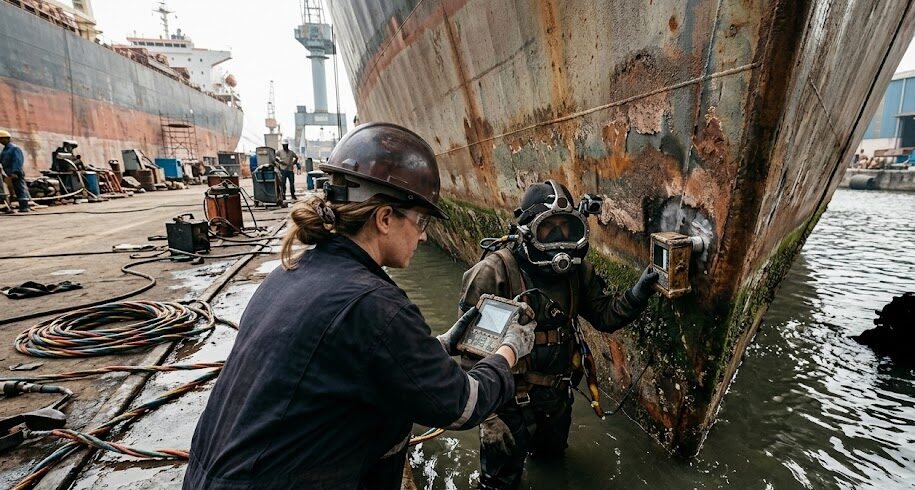
Ultrasonic boat testing is one of the most widely used NDT methods for measuring hull thickness. A handheld ultrasonic gauge sends high-frequency sound waves through the metal. By measuring the time it takes for the sound waves to return, the instrument accurately calculates the remaining plate thickness.
This process allows inspectors to evaluate corrosion without removing large sections of plating.
Benefits of Ultrasonic Testing
- Accurate thickness measurements
- No damage to the hull
- Fast inspection process
- Suitable for steel and aluminum vessels
- Supports preventative maintenance
- Useful for insurance and regulatory surveys
Organizations such as ABS (American Bureau of Shipping) use ultrasonic thickness measurements as part of vessel inspection and classification programs.
Why Steel Hull Thickness Measurements Are Important
Maintaining adequate steel hull thickness is critical for structural integrity. Corrosion gradually removes metal from the hull, reducing its ability to withstand operational loads, wave impacts, and internal stresses.
Regular thickness surveys help:
- Monitor corrosion rates
- Plan repairs before failures occur
- Support insurance inspections
- Meet classification requirements
- Improve vessel safety
Accurate thickness records also help owners budget future maintenance more effectively.
Commercial Boat NDT Applications
Commercial boat NDT is commonly performed on:
- Cargo ships
- Tugboats
- Offshore support vessels
- Fishing vessels
- Passenger ferries
- Steel yachts
- Workboats
Commercial operators often incorporate NDT into scheduled maintenance programs to reduce downtime while maintaining regulatory compliance.
Underwater Metal Thickness Inspections
Modern equipment allows qualified inspectors to perform underwater metal thickness measurements on certain vessels without requiring immediate dry docking.
Professional divers working alongside certified NDT technicians may evaluate:
- Hull plating
- Sea chests
- Ballast tank areas
- Rudders
- Steel pilings
- Offshore structures
Professional Underwater Inspection services often complement NDT by identifying corrosion, impact damage, coating failures, and marine growth that may affect inspection accuracy.
Supporting Hull Integrity Through Preventative Maintenance
Non-destructive testing delivers the greatest value when combined with routine underwater maintenance.
Hull Cleaning
Professional Hull Cleaning removes marine growth that can conceal corrosion and interfere with inspections.
Cavitation Cleaning
Specialized Cavitation Cleaning safely restores propellers and underwater running gear without damaging sensitive metal surfaces.
Corrosion Protection
Routine Zinc Replacement helps minimize galvanic corrosion, extending the life of underwater metals.
Common Mistakes Vessel Owners Make
- Waiting until visible corrosion appears before scheduling inspections.
- Assuming paint hides structural problems.
- Skipping ultrasonic thickness surveys on aging steel vessels.
- Ignoring small dents or impact damage.
- Delaying corrosion repairs.
- Overlooking underwater inspections between haul-outs.
Frequently Asked Questions
What is marine non-destructive testing?
Marine non-destructive testing uses inspection techniques such as ultrasonic testing, visual examination, magnetic particle testing, and dye penetrant testing to evaluate hull condition without damaging the vessel.
How does ultrasonic boat testing measure hull thickness?
Ultrasonic gauges send sound waves through the metal and calculate remaining thickness by measuring the time required for the reflected signal to return.
Which vessels benefit from NDT?
Steel yachts, commercial vessels, workboats, tugboats, ferries, offshore support vessels, and many aluminum vessels all benefit from routine non-destructive testing.
Can underwater inspections replace ultrasonic testing?
No. Visual underwater inspections identify visible damage and corrosion, while ultrasonic testing measures actual metal thickness beneath the surface. Both methods complement each other.
How often should hull thickness be measured?
Inspection frequency depends on vessel age, operating conditions, classification requirements, and corrosion history. Older steel vessels generally require more frequent monitoring.
Looking for more expert marine maintenance advice? Visit our blog for additional guides on underwater inspections, hull maintenance, and commercial diving services.
Conclusion
Marine non-destructive testing provides vessel owners with valuable insight into hull condition without causing structural damage. By combining ultrasonic boat testing, NDT hull inspections, underwater evaluations, and preventative maintenance, owners can identify corrosion early, monitor steel hull thickness, improve safety, and extend the operational life of their vessels. Investing in regular inspections today helps prevent costly repairs and unexpected downtime in the future.
Ready to protect your vessel?
If you need expert help with this, our team of certified divers and marine technicians is ready to step in. Learn more about our specific services here.
Prefer to speak with an expert immediately? Contact us today to schedule a service or get a free quote!
