Your boat’s bottom paint does much more than improve appearance—it serves as the first line of defense against marine growth, corrosion, and reduced performance. Choosing between ablative vs hard bottom paint is one of the most important maintenance decisions boat owners make, especially if the vessel spends significant time in the water. The right coating helps minimize fouling, protects the hull, and makes routine underwater maintenance more effective, while the wrong choice can lead to unnecessary cleaning, faster paint wear, and higher operating costs.
Whether you own a center console, sailboat, yacht, or commercial vessel, understanding how each antifouling system works allows you to maximize hull protection and extend the life of your investment.
Ablative vs. Hard Bottom Paint: What’s the Difference?
Ablative bottom paint gradually wears away during normal boat use, continually exposing fresh biocide to prevent marine growth. Hard bottom paint forms a durable outer coating that does not wear away as quickly, making it suitable for boats that operate at higher speeds or require frequent underwater cleaning. The best choice depends on vessel usage, water conditions, and maintenance practices.
Both coatings are effective antifouling solutions, but each performs differently depending on how and where the boat is used.
According to the U.S. Environmental Protection Agency (EPA), antifouling coatings play an important role in reducing marine biofouling while helping improve vessel efficiency when properly maintained.
What Is Ablative Bottom Paint?
Ablative coatings, often called self-polishing copolymer paints or self-polishing antifouling paints, slowly erode as water flows across the hull. This controlled wearing process continuously exposes fresh biocide, helping prevent algae, slime, barnacles, and other marine organisms from attaching.
Advantages of Ablative Paint
- Continuously renews its protective surface
- Less paint buildup over time
- Excellent for boats used regularly
- Generally provides effective long-term antifouling protection
- Often requires less aggressive cleaning
Potential Limitations
- May wear prematurely on frequently trailered boats.
- Can lose effectiveness if the boat remains unused for long periods, depending on the formulation.
- Not always ideal for high-speed performance vessels.
What Is Hard Bottom Paint?
Epoxy bottom paint and other hard antifouling coatings create a durable outer surface that remains largely intact throughout its service life. Instead of gradually wearing away, the coating slowly releases antifouling agents while maintaining a tough protective barrier.
Hard coatings are commonly selected for:
- High-performance boats
- Racing sailboats
- Commercial vessels
- Boats requiring frequent underwater cleaning
- Trailered boats
Advantages of Hard Bottom Paint
- Highly durable surface
- Withstands repeated cleaning
- Smooth finish suitable for higher speeds
- Good resistance to abrasion
- Long service intervals when properly maintained
Potential Limitations
- Paint buildup may occur after repeated recoating.
- Eventually requires sanding or stripping before reapplication.
- May require more careful cleaning techniques to preserve effectiveness.
Comparing Antifouling Paint Types
| Feature | Ablative Paint | Hard Bottom Paint |
|---|---|---|
| Surface Wear | Gradually self-polishes | Remains largely intact |
| Paint Buildup | Minimal | Can accumulate over time |
| Cleaning Frequency | Gentle cleaning recommended | Tolerates more frequent cleaning |
| Best For | Frequently used boats | High-speed or trailered boats |
| Maintenance | Less sanding between recoats | Periodic stripping may be required |
How Bottom Paint Affects Hull Performance
The condition of your antifouling coating directly affects fuel efficiency, speed, and overall vessel performance.
Proper hull coating maintenance helps:
- Reduce marine growth
- Improve fuel efficiency
- Maintain cruising speed
- Reduce engine workload
- Protect the fiberglass hull
- Lower long-term maintenance costs
The International Maritime Organization (IMO) recognizes marine biofouling management as an important factor in improving vessel efficiency and reducing environmental impacts.
Why Professional Bottom Paint Cleaning Matters
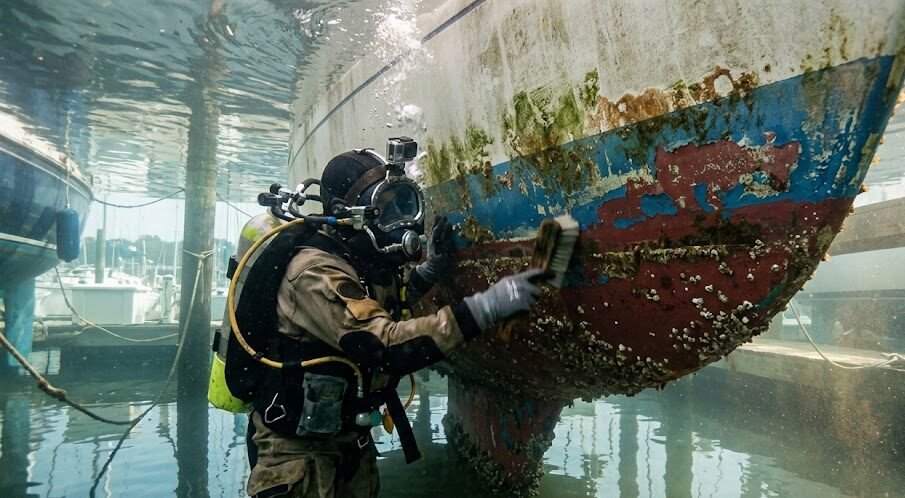
Regardless of which coating you choose, proper bottom paint cleaning is essential. Aggressive scrubbing with the wrong tools can prematurely remove ablative coatings or unnecessarily wear hard paints.
Professional Hull Cleaning services use paint-appropriate cleaning techniques based on the coating type, marine growth level, and manufacturer recommendations.
Experienced commercial divers understand how different antifouling paint types respond to underwater cleaning, helping preserve the coating while effectively removing marine growth.
Choosing the Best Paint for Saltwater
Selecting the best paint for saltwater depends on several factors rather than a single product.
Consider:
- How often the boat is used
- Local fouling conditions
- Water temperature
- Boat speed
- Storage method
- Cleaning schedule
- Manufacturer recommendations
Major manufacturers such as Sea Hawk Paints and International Yacht Paint offer coatings designed for different operating environments and maintenance needs.
Supporting Underwater Maintenance
Bottom paint performs best when combined with routine underwater maintenance.
Running Gear Cleaning
Professional Cavitation Cleaning safely removes fouling from propellers and underwater metals without damaging polished surfaces.
Routine Underwater Inspections
Regular Underwater Inspection services identify coating wear, damage, or excessive marine growth before performance declines.
Corrosion Protection
Routine Zinc Replacement helps protect underwater metals while preserving the integrity of the vessel’s propulsion system.
Common Mistakes Boat Owners Make
- Using abrasive brushes on ablative coatings.
- Selecting paint based only on price.
- Ignoring manufacturer maintenance recommendations.
- Waiting until heavy barnacle growth develops before cleaning.
- Applying incompatible coatings over existing paint.
- Skipping routine underwater inspections.
Frequently Asked Questions
Which is better: ablative or hard bottom paint?
The best choice depends on how you use your boat. Ablative paint works well for vessels used regularly because it continually renews its surface, while hard bottom paint is often preferred for high-speed boats and vessels that require frequent underwater cleaning.
How often should bottom paint be cleaned?
Cleaning frequency depends on water temperature, marine growth, and the type of antifouling paint applied. Regular inspections help determine the appropriate maintenance schedule before fouling becomes excessive.
Can divers clean both paint types?
Yes. Professional divers adjust their cleaning methods based on the specific coating to remove marine growth while minimizing unnecessary paint wear.
Does bottom paint improve fuel efficiency?
Indirectly, yes. Effective antifouling coatings reduce marine growth, helping maintain a smoother hull surface that lowers drag and improves overall vessel efficiency.
How do I know when bottom paint needs replacement?
Signs include excessive fouling despite regular cleaning, visible coating wear, exposed hull areas, or recommendations identified during underwater inspections.
Looking for more expert boat maintenance advice? Visit our blog for additional guides on hull care, underwater inspections, and marine maintenance.
Conclusion
Choosing between ablative vs hard bottom paint depends on your boat’s operating conditions, maintenance routine, and performance goals. Both antifouling paint types offer effective protection when properly selected and maintained. Combined with professional hull cleaning, underwater inspections, and routine preventative maintenance, the right bottom coating helps maximize efficiency, reduce marine growth, and protect your vessel for years to come.
Ready to protect your vessel?
If you need expert help with this, our team of certified divers and marine technicians is ready to step in. Learn more about our specific services here.
Prefer to speak with an expert immediately? Contact us today to schedule a service or get a free quote!
