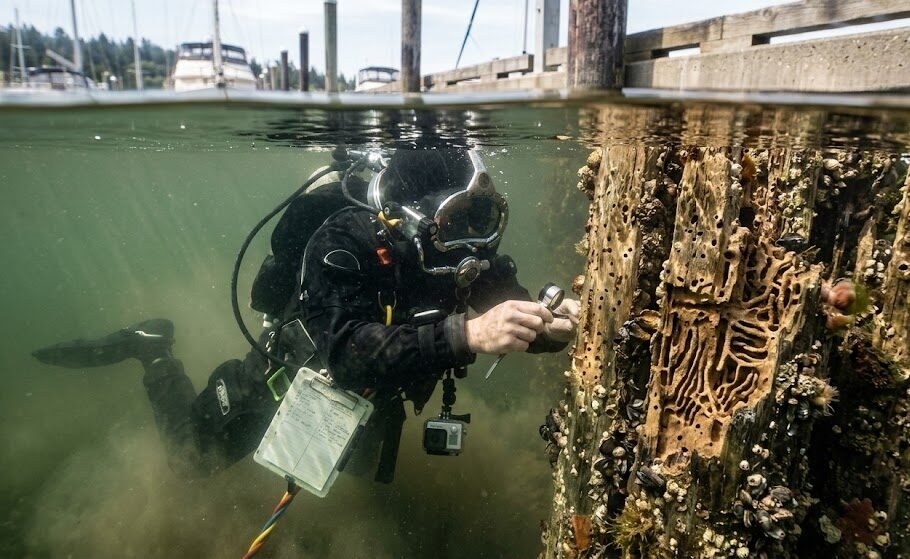
Timber pilings have supported docks, marinas, seawalls, and waterfront structures for generations, but beneath the waterline they face a hidden threat that often goes unnoticed until serious damage occurs. One of the most destructive marine pests is the shipworm. Despite its name, a shipworm is not a worm at all—it’s a wood-boring marine mollusk capable of tunneling deep inside submerged timber while leaving the outer surface looking relatively intact. Recognizing shipworm piling damage early can prevent costly structural failures, improve waterfront safety, and extend the service life of marine infrastructure.
Whether you manage a private dock, commercial marina, yacht club, or waterfront property, routine underwater inspections are essential for identifying hidden deterioration before it compromises structural integrity.
What Is Shipworm Piling Damage?
Shipworm piling damage occurs when marine borers known as shipworms tunnel through submerged wooden pilings, consuming the timber from the inside out. Although the exterior may appear sound, extensive internal cavities can weaken the piling, leading to structural instability and, in severe cases, complete failure.
Unlike surface rot, shipworm damage often remains invisible until an underwater inspection or structural failure reveals the extent of deterioration.
According to the NOAA National Ocean Service, marine wood-boring organisms have long been recognized as one of the primary causes of deterioration in submerged timber structures worldwide.
What Are Shipworms?
Shipworms belong to the family Teredinidae and are actually marine mollusks related to clams. Their elongated bodies allow them to bore deep into submerged wood using specialized shell structures at the front of their bodies.
Commonly referred to as marine borers, these organisms thrive in saltwater and brackish environments where untreated or aging timber is continuously submerged.
Common structures affected include:
- Dock pilings
- Marina piers
- Boardwalk supports
- Boat lift pilings
- Bulkheads
- Timber seawalls
How Teredo Worms Damage Dock Structures
Although people often refer to them as teredo worms dock pests, shipworms are mollusks that excavate long tunnels through wood while remaining protected inside the timber.
As they feed and grow, they leave behind smooth internal galleries lined with calcium carbonate. Over time, these tunnels overlap, reducing the wood’s structural strength even when little external damage is visible.
This hidden deterioration makes professional underwater inspections especially important for aging waterfront structures.
Warning Signs of Shipworm Damage
Because shipworms attack from within, visible symptoms often appear only after significant deterioration has occurred.
Watch for these warning signs:
- Soft or hollow-sounding timber
- Small round openings on submerged wood
- Excessive wood weakening
- Cracking near the waterline
- Leaning dock sections
- Unstable pilings during heavy loads
- Unexpected movement while walking on docks
Routine Underwater Inspection services allow divers to identify internal deterioration before visible structural failure occurs.
Shipworms vs. Rotting Dock Posts
Many property owners mistake shipworm damage for simple decay. However, rotting dock posts and shipworm infestations develop differently.
| Shipworm Damage | Wood Rot |
|---|---|
| Caused by marine borers | Caused by fungi and moisture |
| Internal tunneling | Gradual surface decay |
| Common below waterline | Often near splash zone or above water |
| Exterior may appear healthy | Visible softening and discoloration |
| Requires underwater inspection | Often visible during routine inspection |
Understanding the difference helps property owners select the appropriate repair strategy before deterioration spreads.
Why Underwater Timber Inspections Matter
An underwater timber inspection provides the most reliable method for evaluating submerged wooden structures. Professional commercial divers inspect areas that cannot be assessed from above the waterline.
During an inspection, divers evaluate:
- Structural integrity of timber pilings
- Evidence of marine borer activity
- Surface erosion and abrasion
- Cracks and splits
- Joint condition
- Scour around piling bases
- Photographic documentation
Inspection findings help marina operators and waterfront property owners prioritize repairs before significant structural damage develops.
How Shipworm Damage Leads to Wood Piling Failure
As internal tunnels multiply, the load-bearing capacity of a piling decreases dramatically. Eventually, even normal wave action, vessel impacts, or dock traffic can trigger wood piling failure.
Consequences may include:
- Collapsed docks
- Unsafe walking surfaces
- Boat lift instability
- Expensive emergency repairs
- Interrupted marina operations
- Potential liability issues
Organizations such as the World Association for Waterborne Transport Infrastructure (PIANC) emphasize regular inspection and maintenance of marine infrastructure to improve long-term structural reliability.
Preventative Maintenance for Timber Pilings
Although no timber remains immune forever, proactive maintenance significantly extends service life.
Routine Underwater Inspections
Regular Underwater Inspection services identify early damage before structural integrity is compromised.
Piling Cleaning
Professional Piling Cleaning removes marine growth that can conceal deterioration and improve inspection visibility.
Hull Maintenance Around Dock Facilities
For marinas serving recreational and commercial vessels, routine Hull Cleaning helps reduce excessive marine growth that can contribute to broader maintenance challenges throughout the facility.
Common Mistakes Property Owners Make
- Assuming pilings are sound because they look healthy above water.
- Ignoring small signs of structural movement.
- Waiting until visible failure occurs before scheduling inspections.
- Confusing shipworm damage with normal wood aging.
- Skipping routine underwater inspections.
- Allowing heavy marine growth to obscure timber surfaces.
Frequently Asked Questions
What causes shipworm piling damage?
Shipworm piling damage is caused by marine mollusks that bore tunnels through submerged timber, gradually weakening the wood from the inside while leaving the exterior relatively intact.
Can shipworm damage be repaired?
Repair options depend on the extent of deterioration. Severely damaged pilings often require reinforcement or replacement, while early detection may allow preventative maintenance before structural failure occurs.
How do underwater inspections detect shipworms?
Professional divers examine submerged timber for entry holes, surface deterioration, structural instability, and other evidence of marine borer activity while documenting findings with photographs.
Are shipworms found only in saltwater?
Shipworms are most common in saltwater and many brackish environments. Their activity varies depending on water salinity, temperature, and local environmental conditions.
How often should timber pilings be inspected?
Inspection frequency depends on environmental conditions, structure age, and local marine borer activity. Waterfront structures in warm coastal waters generally benefit from regular underwater inspections.
Looking for more expert waterfront maintenance advice? Visit our blog for additional guides on marine infrastructure, underwater inspections, and preventative maintenance.
Conclusion
Shipworm piling damage is one of the most destructive threats facing submerged timber structures because deterioration often remains hidden until major structural problems develop. Routine underwater timber inspections, professional piling cleaning, and early identification of marine borers help property owners protect docks, marinas, and waterfront investments while avoiding costly emergency repairs. Proactive inspection is always more affordable than rebuilding a failed structure.
Ready to protect your vessel?
If you need expert help with this, our team of certified divers and marine technicians is ready to step in. Learn more about our specific services here.
Prefer to speak with an expert immediately? Contact us today to schedule a service or get a free quote!
