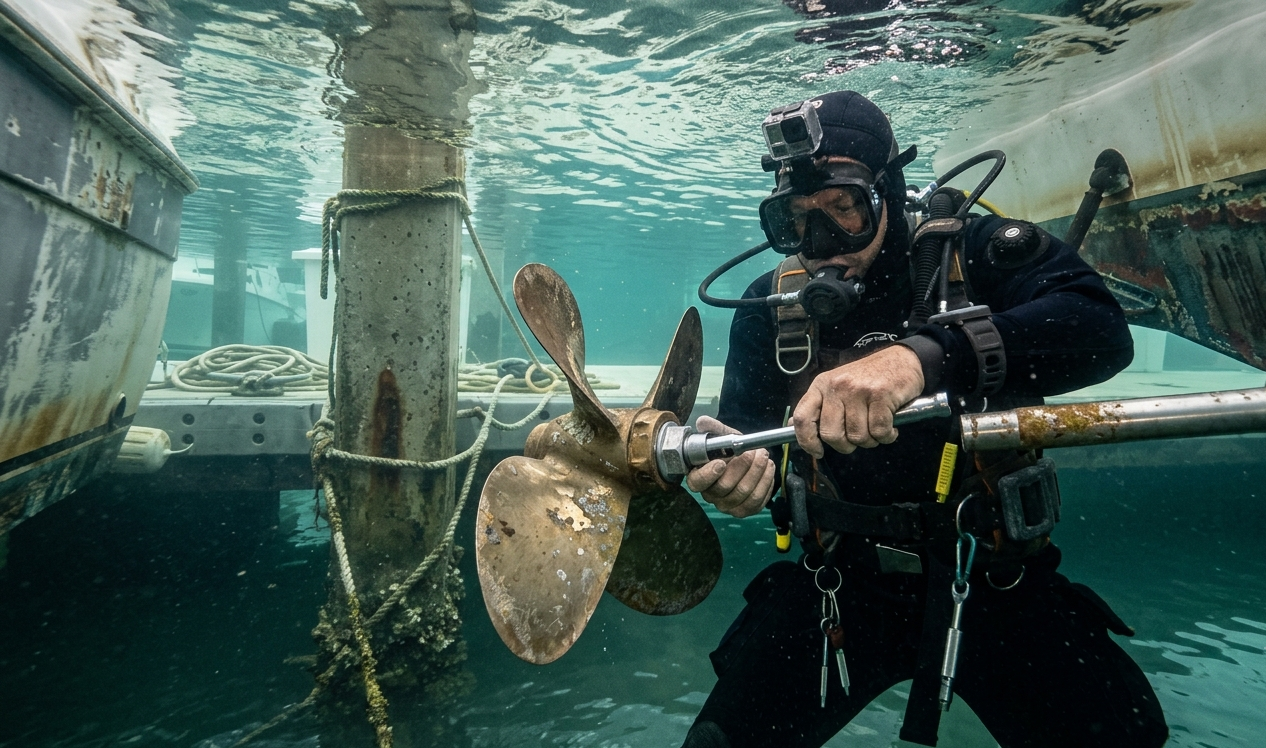
When a high-speed boat starts losing its prop-nut anode, the problem is rarely just the cost of replacing one small piece of zinc. A loose or missing anode can leave the propeller shaft and running gear with less protection against galvanic corrosion, especially when the vessel spends long periods in saltwater.
Prop-nut anode installation deserves particular attention on fast vessels because vibration, propeller rotation, shaft movement, and water flow can place additional demands on the hardware securing the anode. We have seen small installation issues become bigger maintenance problems when an anode is installed without checking fit, fasteners, shaft condition, or clearance.
The right approach is simple: install the correct anode for the shaft and propeller system, ensure solid mechanical contact, secure it according to the manufacturer’s requirements, and inspect it regularly for movement, wear, and loss.
What Is a Prop-Nut Anode?
A prop-nut anode is a sacrificial metal anode fitted around or onto the propeller nut or nearby shaft assembly. Its purpose is to provide sacrificial material that corrodes preferentially, helping protect more valuable underwater metal components from galvanic corrosion.
Depending on the vessel and running gear, anodes may be manufactured from zinc, aluminum, or other purpose-selected alloys. The correct material depends on the operating environment and the manufacturer’s specifications.
A propeller zinc is not simply an interchangeable piece of metal. Its alloy, size, contact with the protected metal, and installation all influence whether it can perform properly.
Why High-Speed Boats Need Special Attention
High speed boat corrosion can become a maintenance concern when underwater components experience demanding operating conditions. Fast vessels can generate substantial water flow and vibration around the propeller, shaft, struts, and anodes.
That does not mean speed automatically causes anodes to fail. Instead, high-speed operation can make installation quality, mechanical security, and condition monitoring especially important.
A prop-nut anode that is slightly loose at the dock may experience very different forces once the boat is operating at cruising speed.
Vibration Can Loosen Hardware
Propulsion systems naturally generate vibration. If an anode’s retaining hardware is not properly fitted or secured, repeated vibration can contribute to movement or loosening.
This is one reason vibration losing zincs is a useful warning phrase for owners of fast boats. If anodes repeatedly disappear or become loose, replacing them without investigating why can leave the underlying problem unresolved.
Water Flow Adds Another Variable
High-speed water flow places continuous hydrodynamic forces around the running gear. A poorly fitted anode can create additional drag or become vulnerable to mechanical damage.
The objective is not to install the largest possible anode. It is to install an appropriately sized and correctly fitted anode that remains secure during normal vessel operation.
How Prop-Nut Anode Installation Protects Running Gear
Prop-nut anode installation works by placing a sacrificial metal component in electrical continuity with the underwater metal it is intended to protect.
When dissimilar metals are electrically connected while immersed in an electrolyte such as seawater, galvanic corrosion can occur. The more active sacrificial metal is intended to corrode instead of the protected component.
For the system to work, the anode needs good electrical contact with the metal it protects. A new anode that is isolated by paint, corrosion, marine growth, or an insulating layer may not provide the intended protection.
Step-by-Step Prop-Nut Anode Installation
1. Confirm the Correct Anode
Before installation, confirm the anode’s dimensions, alloy, mounting arrangement, and compatibility with the vessel’s propulsion system.
Do not select an anode based solely on appearance. Shaft diameter, propeller-nut dimensions, manufacturer specifications, operating water, and surrounding metals all matter.
2. Inspect the Propeller Nut and Shaft
Before fitting a new anode, inspect the mounting area. Remove loose corrosion products and check for damage, unusual wear, or deformation.
The mating surfaces should be clean enough to establish the electrical and mechanical connection specified by the anode manufacturer.
3. Check the Anode Fit
A prop-nut anode should fit securely against the intended mounting surface. It should not wobble, rock excessively, or require force that could deform the anode or surrounding components.
A poor fit can contribute to vibration, uneven wear, and premature loosening.
4. Maintain Metal-to-Metal Contact
Electrical continuity is essential. Do not paint between the anode and the surface it is intended to protect unless the manufacturer specifically provides an installation method that calls for it.
Likewise, excessive corrosion, marine growth, or coatings between mating surfaces can interfere with electrical continuity.
5. Secure the Retaining Hardware Correctly
Follow the manufacturer’s installation instructions for fasteners, torque, locking arrangements, and any retaining components supplied with the anode.
Do not improvise a locking method simply because the hardware appears tight by hand. The correct mechanical connection helps the anode remain secure during operation.
6. Check Clearance
After installation, verify that the anode has adequate clearance from the hull, propeller blades, strut, rudder, and other moving or stationary components.
This is especially important on high-speed vessels where even a small interference problem can become serious at operating speed.
Common Causes of Shaft Anode Failure
Shaft anode failure can happen for several reasons, and identifying the cause is more useful than simply installing another replacement.
Poor Electrical Contact
An anode must be electrically connected to the metal it is protecting. Paint, heavy corrosion, contamination, or an incorrect installation can interfere with that connection.
Incorrect Anode Material
Using the wrong alloy for the vessel’s operating environment can affect anode performance. Zinc, aluminum, and other anode materials are not automatically interchangeable.
Insufficient Anode Capacity
An anode that is too small for the protected system may be consumed rapidly. Conversely, installing additional anode material without understanding the vessel’s electrical system is not automatically better.
Loose Installation
If the anode moves on the shaft or propeller nut, vibration and mechanical wear can accelerate deterioration. In extreme cases, the anode can loosen and disappear entirely.
Electrical or Bonding Problems
If anodes are disappearing unusually quickly, the cause may extend beyond the anode itself. Stray current corrosion, bonding issues, shore-power problems, or other electrical conditions can contribute to accelerated underwater corrosion.
Repeated anode loss is therefore a reason to investigate the complete underwater and electrical system rather than simply replacing the missing zinc.
How to Prevent Vibration From Losing Zincs
Vibration losing zincs is particularly frustrating because the vessel may leave the dock with a correctly installed anode and return with part or all of it missing.
To reduce the risk:
- Use the correct anode for the application.
- Inspect the mounting surface before installation.
- Ensure proper metal-to-metal contact.
- Use the manufacturer’s specified fasteners and locking method.
- Follow specified torque requirements.
- Check the anode for movement during routine inspections.
- Investigate repeated loosening instead of simply replacing the anode.
- Inspect the propeller, shaft, and surrounding running gear for vibration-related problems.
If an anode is loose, badly worn, or missing shortly after installation, the vessel should be inspected before assuming another replacement will solve the problem.
Propeller Zinc vs. Aluminum Anodes
Many boat owners refer to all sacrificial anodes as “zincs,” but zinc is not the only material used for marine cathodic protection.
Zinc has traditionally been widely used in seawater. Aluminum anodes are also used in marine applications and can have different electrochemical characteristics and advantages.
The correct choice should be based on the vessel, operating environment, manufacturer’s recommendations, and the metals being protected. Avoid switching anode materials simply because one appears to last longer on another boat.
The BoatUS guide to sacrificial anodes explains the role of zinc and other sacrificial anode materials and highlights the importance of matching anode material to the operating environment.
What Is a Cone Anode?
A cone anode installation uses a tapered or conical anode designed to fit a particular propeller, propeller nut, or shaft arrangement.
These anodes are commonly used where the available space and hydrodynamic shape make a conventional shaft collar impractical. The exact installation varies by design, so the manufacturer’s instructions should determine how the anode is fitted and secured.
The important considerations remain the same: correct fit, electrical continuity, mechanical security, appropriate material, and sufficient clearance.
Signs Your Prop-Nut Anode Needs Attention
A sacrificial anode is supposed to deteriorate. The question is whether it is deteriorating at an expected rate and whether it remains mechanically secure.
Watch for:
- Excessive anode wastage
- Uneven erosion
- Cracks or physical damage
- Loose retaining hardware
- Visible movement
- Anode separation from the protected metal
- Missing anode material
- Unexpected corrosion on the propeller or shaft
- Rapid anode consumption between inspections
Anode condition should be recorded during routine underwater inspections so changes can be compared over time.
Our zinc replacement and anode services can help inspect and replace underwater sacrificial anodes without requiring the vessel to be hauled out in every situation.
Common Mistakes With Prop-Nut Anode Installation
Installing an Anode That Is “Close Enough”
Anodes are not universal hardware. The correct dimensions and mounting arrangement matter.
Painting the Contact Surface
Paint or other insulating material between the anode and protected metal can interfere with electrical continuity.
Ignoring the Shaft Condition
A damaged or heavily corroded mounting surface can prevent the anode from fitting correctly and making reliable contact.
Replacing a Missing Anode Without Investigating
If the same anode repeatedly disappears, something may be causing the failure. Vibration, poor fit, incorrect installation, or an electrical problem should be considered.
Assuming Faster Consumption Is Normal
Anodes are designed to sacrifice themselves, but unusually rapid consumption can be a useful warning sign. It may indicate an electrical or galvanic condition that deserves further investigation.
DIY vs. Professional Anode Installation
Some owners can replace accessible anodes during a haul-out or routine maintenance period. The job becomes more involved when the anode is underwater, difficult to access, or part of a high-speed propulsion system.
A professional underwater technician can inspect the propeller, shaft, anode, strut, rudder, and surrounding components at the same time. This provides more context when anodes are wearing unusually fast or disappearing between service intervals.
An underwater inspection can also identify other issues that may contribute to vibration or corrosion. Our underwater inspection service can be used to document the condition of the vessel’s running gear and underwater components.
If marine growth is obscuring the propeller, shaft, or anode, appropriate underwater hull cleaning can also help provide a clearer view of the running gear during scheduled maintenance.
How Often Should Prop-Nut Anodes Be Checked?
There is no single replacement interval that applies to every vessel. Anode consumption depends on the vessel’s underwater metals, electrical system, water conditions, operating schedule, anode material, and installation.
A practical approach is to inspect anodes whenever the boat is hauled or during scheduled underwater maintenance. High-speed vessels, boats with a history of rapid anode loss, and vessels operating in complex marina electrical environments may warrant more frequent monitoring.
Keep records of the anode’s condition and percentage of material remaining. A pattern is much more useful than a single snapshot.
FAQs About Prop-Nut Anode Installation
What does a prop-nut anode do?
A prop-nut anode is a sacrificial metal component installed on or around the propeller nut or nearby shaft assembly. It is intended to corrode preferentially and help protect connected underwater metal components from galvanic corrosion.
Why do high-speed boats lose propeller zincs?
High-speed operation can expose underwater components to substantial vibration and water flow. If an anode is incorrectly fitted, inadequately secured, or affected by another mechanical or electrical problem, it may loosen or wear unusually quickly.
Should a prop-nut anode touch the propeller shaft?
The anode needs the electrical connection specified by its manufacturer to protect the intended metal components. The exact mounting arrangement varies by anode design, so follow the manufacturer’s installation instructions rather than assuming every prop-nut anode installs the same way.
Can I paint a propeller zinc?
Do not paint the anode or its required contact surfaces unless the manufacturer specifically says that a particular coating is acceptable. Paint can interfere with the electrical connection required for sacrificial protection.
Why is my shaft anode disappearing so quickly?
Rapid anode consumption can result from normal galvanic activity, but unusually fast loss can also be associated with incorrect anode material, inadequate sizing, poor installation, stray electrical currents, bonding problems, or other corrosion conditions. Repeated rapid loss deserves investigation.
Are aluminum anodes better than zinc anodes?
Neither material is universally correct for every vessel. Zinc and aluminum anodes have different electrochemical characteristics, and the appropriate choice depends on the operating environment, vessel system, protected metals, and manufacturer’s specifications.
Read More: Explore more practical underwater maintenance advice and real-world marine service insights on the UMS marine maintenance blog.
Conclusion
Prop-nut anode installation is a small maintenance task with an important role in protecting expensive underwater running gear. On high-speed vessels, correct fit, reliable electrical contact, secure installation, and regular inspection become especially important because vibration and water flow can expose weak installations quickly.
If an anode disappears, loosens, or wears much faster than expected, do not simply install another one and move on. Inspect the shaft, propeller, mounting arrangement, electrical bonding, and surrounding underwater components to determine why the anode failed.
With the right anode material, proper installation, and consistent monitoring, sacrificial anodes can provide an important layer of protection for propellers, shafts, and other underwater metals.
Ready to protect your vessel?
If you need expert help with this, our team of certified divers and marine technicians is ready to step in. Learn more about our specific services here.
Prefer to speak with an expert immediately? Contact us today to schedule a service or get a free quote!
