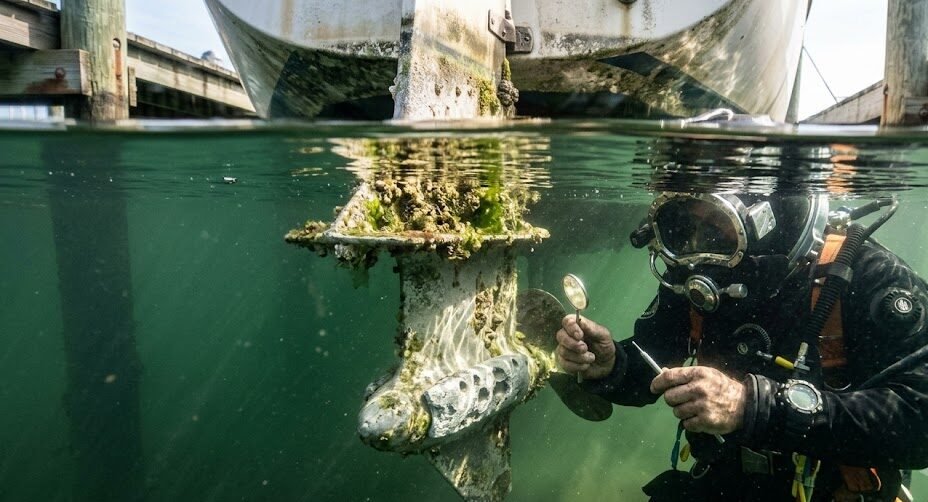
Modern saildrives provide excellent maneuverability, efficient power transfer, and quieter operation compared to traditional shaft-driven propulsion systems. However, because most saildrives use aluminum housings, they are especially vulnerable to electrochemical corrosion below the waterline. Understanding saildrive corrosion protection is essential for preventing expensive repairs, extending equipment life, and ensuring reliable performance throughout the boating season.
Whether your sailboat is equipped with a Volvo Penta, Yanmar, or another saildrive system, corrosion prevention requires more than simply replacing zinc anodes. Proper underwater inspections, electrical system maintenance, and routine servicing all work together to protect these valuable propulsion components.
What Is Saildrive Corrosion Protection?
Saildrive corrosion protection is the combination of sacrificial anodes, proper bonding, electrical isolation, routine underwater inspections, and preventative maintenance used to protect aluminum saildrive housings from galvanic corrosion and stray current damage. Because aluminum corrodes more rapidly than many other underwater metals, maintaining these protective systems is critical for long-term reliability.
Unlike traditional propeller shafts, saildrives place a large aluminum housing directly in seawater, making corrosion control even more important.
According to the American Boat & Yacht Council (ABYC), proper bonding systems, corrosion protection, and electrical maintenance are fundamental elements of safe marine electrical installations.
Why Saildrives Are More Vulnerable to Corrosion
Most saildrives use cast aluminum because it offers an excellent balance of strength, corrosion resistance, and weight. However, aluminum is highly susceptible to electrochemical attack when protective systems fail.
Common factors that accelerate corrosion include:
- Saltwater exposure
- Damaged protective coatings
- Depleted sacrificial anodes
- Faulty marina electrical systems
- Poor bonding connections
- Improper maintenance practices
Even small areas of exposed aluminum can begin corroding quickly under unfavorable electrical conditions.
Understanding Marine Electrolysis
Many boat owners use the term marine electrolysis to describe underwater corrosion caused by electrical activity. In practice, corrosion generally falls into two categories: galvanic corrosion and stray current corrosion.
Galvanic Corrosion
This natural electrochemical process occurs when dissimilar metals are electrically connected while immersed in seawater. Sacrificial anodes are specifically designed to protect against this type of corrosion.
Stray Current Corrosion
Stray current corrosion results from electrical faults onboard the vessel or within marina shore power systems. Unlike normal galvanic corrosion, stray current damage can destroy aluminum components in a surprisingly short period.
The U.S. Coast Guard Boating Safety Division recommends maintaining marine electrical systems to reduce both safety hazards and corrosion-related damage.
Why Sailboat Anode Replacement Is Essential
Sailboat anode replacement is one of the most effective ways to protect saildrives against galvanic corrosion. Sacrificial anodes intentionally corrode before valuable aluminum components, preserving the saildrive housing and associated underwater metals.
Professional Zinc Replacement services ensure worn anodes are replaced before they lose their ability to protect the propulsion system.
Anodes should never be painted, and they should always maintain good electrical contact with the protected components.
Aluminum Saildrive Galvanic Protection
Proper aluminum saildrive galvanic protection involves several maintenance practices working together.
- Replace sacrificial anodes before they become fully depleted.
- Inspect protective coatings regularly.
- Repair damaged paint promptly.
- Maintain proper bonding systems.
- Inspect marina shore power equipment.
- Monitor for unusual corrosion patterns.
Ignoring any one of these areas can significantly reduce the effectiveness of the entire corrosion protection system.
Volvo Saildrive Zincs vs. Yanmar Saildrive Anodes
Different saildrive manufacturers use specific anode designs engineered for their propulsion systems.
| Volvo Saildrive Zincs | Yanmar Saildrive Anodes |
|---|---|
| Designed specifically for Volvo Penta saildrives | Designed for Yanmar saildrive models |
| Protect aluminum housing and propeller components | Protect saildrive casing and underwater metals |
| Require periodic inspection and replacement | Require routine inspection and replacement |
| Use manufacturer-approved replacement parts | Use manufacturer-approved replacement parts |
Whether using Volvo saildrive zincs or Yanmar saildrive anodes, always follow the manufacturer’s maintenance schedule and install the correct anode material for the water where the vessel operates.
Manufacturers such as Volvo Penta and Yanmar Marine publish detailed maintenance recommendations for their saildrive systems.
Routine Underwater Inspections Prevent Costly Repairs
Corrosion often begins below the waterline, where it remains hidden until significant damage has already occurred.
Professional Underwater Inspection services help identify:
- Depleted anodes
- Paint damage
- Pitting corrosion
- Marine growth
- Loose hardware
- Seal condition
- Propeller damage
Routine inspections allow boat owners to address minor problems before they require major repairs or haul-outs.
Supporting Saildrive Maintenance
Hull Cleaning
Professional Hull Cleaning removes marine growth that increases drag while allowing divers to inspect surrounding underwater components.
Cavitation Cleaning
Specialized Cavitation Cleaning safely removes fouling from propellers and underwater metals without damaging polished surfaces.
Boat Wash & Detailing
Routine Boat Wash & Detailing helps preserve the vessel’s overall appearance while complementing underwater maintenance.
Common Mistakes Sailboat Owners Make
- Waiting until anodes are completely consumed before replacing them.
- Painting over sacrificial anodes.
- Ignoring damaged saildrive coatings.
- Assuming corrosion is only caused by saltwater.
- Overlooking marina electrical faults.
- Skipping routine underwater inspections.
Frequently Asked Questions
Why do saildrives corrode faster than traditional shafts?
Saildrives typically use aluminum housings that are more susceptible to galvanic and stray current corrosion than many stainless steel shaft systems, making proper corrosion protection especially important.
How often should saildrive anodes be replaced?
Replacement depends on water conditions, marina electrical activity, and vessel usage. Regular inspections ensure anodes are replaced before they become ineffective.
Can stray current destroy a saildrive?
Yes. Stray current corrosion caused by electrical faults can damage aluminum saildrives much more rapidly than normal galvanic corrosion if left unresolved.
Do I need underwater inspections if my anodes look fine?
Yes. Underwater inspections evaluate coatings, corrosion, marine growth, seals, and other components that cannot be fully assessed from above the waterline.
Can marine growth increase corrosion risk?
Marine growth can conceal early corrosion, interfere with inspections, and trap moisture against underwater surfaces, making routine cleaning an important part of preventative maintenance.
Looking for more expert sailboat maintenance advice? Visit our blog for additional guides on underwater inspections, corrosion prevention, and marine maintenance.
Conclusion
Saildrive corrosion protection requires more than replacing sacrificial anodes. By combining regular underwater inspections, proper sailboat anode replacement, healthy electrical systems, and proactive maintenance, boat owners can significantly reduce the risk of galvanic and stray current corrosion. Protecting your saildrive today helps avoid expensive repairs tomorrow while keeping your sailboat operating safely and efficiently.
Ready to protect your vessel?
If you need expert help with this, our team of certified divers and marine technicians is ready to step in. Learn more about our specific services here.
Prefer to speak with an expert immediately? Contact us today to schedule a service or get a free quote!
