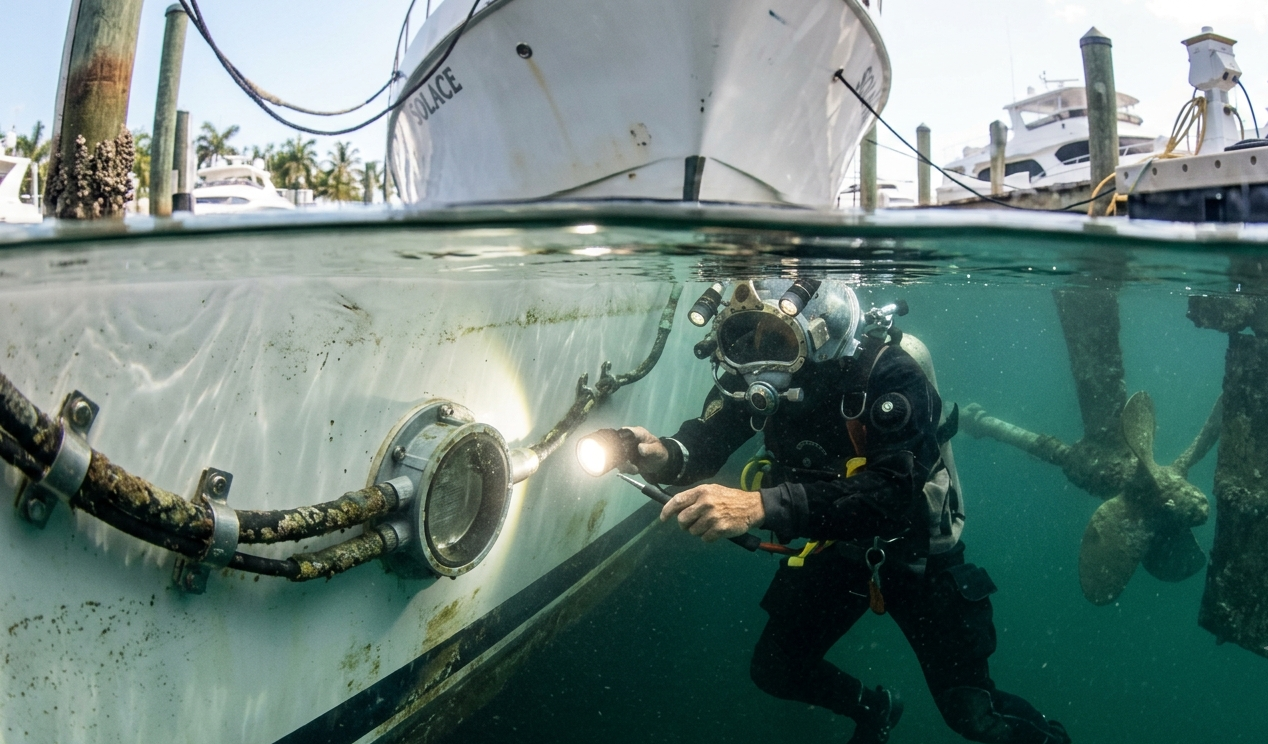
Superyacht corrosion does not always announce itself with obvious rust. Much of the electrochemical activity responsible for underwater metal loss happens below the waterline, around the hull, appendages, shafts, rudders, thrusters, and other submerged components. For large and technically complex yachts, active cathodic protection marine systems can provide a controlled way to reduce corrosion risk.
An impressed current cathodic protection system, commonly called an ICCP system, uses an external electrical power source and dedicated anodes to drive protective current onto the submerged metal structure. ABS describes ICCP as a system in which a transformer-rectifier supplies adjustable DC current to anodes, while reference electrodes can monitor hull potential and support automatic control. :chatgpt-content-reference{index=”0″}
For a large yacht with extensive underwater metalwork, ICCP can be part of a broader corrosion-control strategy alongside coatings, shaft grounding, appropriate sacrificial anodes where required, inspections, and planned underwater maintenance.
What Is an ICCP System on a Yacht?
An ICCP system yacht installation is an impressed current cathodic protection arrangement designed to protect submerged metallic surfaces from electrochemical corrosion. Unlike a conventional zinc or aluminum sacrificial anode, an ICCP system receives electrical power from the vessel and uses controlled current output to maintain the required protective potential.
A typical marine ICCP arrangement includes:
- Impressed-current anodes
- A regulated DC power supply or transformer-rectifier
- Reference electrodes
- Electrical cabling and connections
- Hull bonding and grounding arrangements
- Monitoring and control equipment
ABS identifies anodes, power source, connecting system, and protected structure as the four basic ICCP components, with reference electrodes, monitoring controls, dielectric shields, shaft grounding, and rudder grounding included where applicable. :chatgpt-content-reference{index=”1″}
How Impressed Current Cathodic Protection Works
Impressed current cathodic protection works by applying a controlled electrical current to the underwater metal structure. The objective is to shift the electrochemical potential of the protected metal so that corrosion reactions are suppressed.
The system is fundamentally different from a sacrificial anode system. A zinc or aluminum anode naturally sacrifices itself because of the electrochemical potential difference between the anode and the protected metal. ICCP instead uses an external power source to control the protective current.
ABS notes that ICCP systems can automatically adjust protective current as operating conditions change, including changes in vessel speed and electrolyte resistivity when a vessel moves between seawater, brackish water, and freshwater. :chatgpt-content-reference{index=”2″}
This controllability is one reason ICCP technology is particularly relevant to large vessels with significant underwater surface area and changing operating environments.
Why Superyachts Use Active Cathodic Protection
A superyacht may contain a complex mixture of underwater metals. The hull itself may be steel or aluminum, while propellers, shafts, rudders, thrusters, sea chests, strainers, and fittings can introduce different alloys into the underwater electrical environment.
That combination creates a corrosion-control challenge. The protection system has to be designed around the vessel’s materials, coating condition, underwater geometry, electrical bonding, operating profile, and required protection level.
DNV recognizes both impressed-current and sacrificial-anode cathodic protection systems within its corrosion-protection services and provides approval and technical support for corrosion-protection systems. :chatgpt-content-reference{index=”3″}
ICCP Anodes vs. Electronic Boat Anodes
The term electronic boat anodes is sometimes used informally when discussing active corrosion-protection systems. Technically, the anodes in an ICCP system are not simply electronic versions of zinc anodes. They are part of an electrically powered control system.
ICCP anodes are typically made from relatively durable materials designed for impressed-current service. ABS describes inert materials such as platinized titanium and mixed-metal-oxide systems as examples used in marine ICCP applications. :chatgpt-content-reference{index=”4″}
That means the anode itself is only one part of the system. The control panel, reference cells, wiring, bonding, and monitoring equipment are equally important.
Reference Electrodes: The Feedback System
A reference electrode provides the ICCP controller with information about the electrochemical potential of the protected structure. The controller uses this feedback to regulate current output.
This is important because simply increasing current does not guarantee better protection. A properly designed and controlled system aims to maintain the appropriate protective potential without creating overprotection problems.
ABS specifically identifies reference electrodes as a component of ICCP systems and explains that they allow the system to monitor polarization voltage on the hull and provide feedback to the rectifier. :chatgpt-content-reference{index=”5″}
For a superyacht, reference-cell condition and placement therefore deserve attention during system inspection. A faulty sensor can compromise the quality of the feedback on which automatic control depends.
Can ICCP Prevent Superyacht Corrosion Completely?
No corrosion-protection system should be treated as a guarantee against every form of corrosion. ICCP is one part of a larger corrosion-control strategy.
Coating breakdown, poor bonding, damaged cables, faulty reference cells, incorrect settings, stray-current effects, dissimilar metals, mechanical damage, and localized conditions can all influence corrosion performance.
DNV notes that corrosion can reduce the safety and reliability of ships, components, and marine installations and treats corrosion protection as a system requiring appropriate approval, inspection, and technical support. :chatgpt-content-reference{index=”6″}
That is why ICCP should be inspected and maintained rather than installed and forgotten.
ICCP and the Superyacht’s Shaft and Running Gear
Propeller shafts, rudder stocks, propellers, and other underwater components can require specific bonding and grounding arrangements within a vessel’s corrosion-control system.
ABS lists shaft-ground assemblies and rudder grounding among the additional components that may be included in marine ICCP arrangements. :chatgpt-content-reference{index=”7″}
This makes underwater inspection particularly useful. A technician can check the condition of external components, anodes, bonding connections where accessible, coatings, and nearby underwater hardware rather than looking at the ICCP control panel in isolation.
For vessels requiring regular condition checks, an underwater inspection can provide a visual record of the submerged areas and identify conditions that warrant further engineering or electrical investigation.
ICCP vs. Sacrificial Zinc Anodes
ICCP and sacrificial anode systems use different methods to achieve cathodic protection.
| Feature | ICCP | Sacrificial Anodes |
|---|---|---|
| Power source | External electrical power | No external power required |
| Current control | Can be actively regulated | Determined by electrochemical potential and anode condition |
| Typical anode material | Durable impressed-current anode materials such as MMO-coated titanium | Zinc or aluminum alloys are common in marine applications |
| Monitoring | Can use reference electrodes and automatic controls | Usually monitored through physical anode condition and vessel potential measurements |
| Maintenance focus | Electrical system, anodes, reference cells, bonding, settings, and controls | Anode condition, attachment, placement, and remaining material |
The two approaches are not interchangeable in every vessel. System selection should be based on vessel design, materials, operating conditions, coating system, electrical configuration, and the applicable technical requirements.
Why Overprotection Is Also a Concern
Cathodic protection is about achieving an appropriate protection level, not simply maximizing current.
Incorrect current distribution or excessive polarization can create problems for coatings and other components. ABS guidance on marine coating systems notes that cathodic-protection design and anode placement can affect coating performance, including the potential for blistering when anodes are poorly positioned. :chatgpt-content-reference{index=”8″}
This is one reason ICCP settings should not be casually adjusted without understanding the vessel’s protection requirements and feedback measurements.
What Happens When an ICCP System Fails?
A failure does not necessarily mean immediate visible corrosion. Depending on the vessel and system, an ICCP problem could involve a failed anode, reference electrode fault, power-supply issue, cable problem, bonding fault, incorrect control setting, or loss of electrical continuity.
Some modern systems provide alarms and operational data that make troubleshooting easier. Marine ICCP suppliers also offer systems with automatic logging and remote monitoring capabilities, although the features available depend on the installed equipment. :chatgpt-content-reference{index=”9″}
When a fault is identified, the cause should be investigated rather than simply increasing the output or replacing an external component without testing the complete system.
Maintaining an ICCP System on a Superyacht
A practical maintenance program should combine electrical monitoring with physical underwater inspection.
Check the Control System
Review operating values, alarms, output behavior, and reference-cell readings according to the equipment manufacturer’s maintenance procedures.
Inspect External Anodes
During an underwater inspection or scheduled haul-out, inspect ICCP anodes for physical damage, fouling, attachment problems, coating issues around the installation, and other visible abnormalities.
Inspect Reference Cells
Reference electrodes are critical because they provide the feedback used for control. Their physical condition, readings, and installation should be evaluated according to the system manufacturer’s procedures.
Check Bonding and Shaft Grounding
Where applicable, shaft grounding and bonding arrangements should be verified as part of the vessel’s overall corrosion-control program.
Document Changes
Keeping records of readings, alarms, underwater observations, anode condition, and repairs makes it easier to identify trends before they become expensive problems.
Common Mistakes With Active Cathodic Protection Marine Systems
- Thinking ICCP replaces every zinc anode: The vessel’s complete corrosion-control design determines which protection components are required.
- Ignoring reference electrodes: A control system cannot make good decisions from unreliable feedback.
- Increasing current without diagnosis: More current is not automatically better protection.
- Skipping underwater inspections: A control-panel reading cannot show every physical condition on the hull.
- Ignoring coatings: Cathodic protection and coating condition work together to reduce corrosion demand.
- Failing to document alarms: Intermittent faults can be easier to diagnose when operating history is available.
When Professional Inspection Is Worthwhile
Superyachts often have too much value and complexity for corrosion protection to be treated as a simple anode replacement exercise.
A professional inspection can combine underwater observations with the vessel’s ICCP operating information. This provides a more complete picture of what is happening below the waterline.
For example, if the control system reports an abnormal reference potential, an underwater inspection may reveal a damaged reference cell, heavy fouling, physical damage, coating deterioration, or another condition that needs specialist attention.
Our team can also coordinate corrosion-related underwater work with zinc and anode replacement, hull cleaning, and cavitation cleaning when those services are appropriate for the vessel.
Frequently Asked Questions About ICCP Systems
What does ICCP stand for in marine applications?
ICCP stands for impressed current cathodic protection. It is a corrosion-control system that uses an external electrical power source, controlled anodes, and typically reference electrodes to provide and regulate protective current on submerged metal structures.
Are ICCP systems better than zinc anodes?
They are different protection technologies rather than universally interchangeable options. ICCP provides externally powered and controllable current, while sacrificial zinc or aluminum anodes generate protective current through their natural electrochemical reaction. The appropriate system depends on vessel design and corrosion-control requirements.
Do ICCP systems use zinc anodes?
Typically, ICCP systems use dedicated impressed-current anodes rather than conventional sacrificial zinc anodes for the protected hull. ABS identifies materials such as platinized titanium and mixed-metal-oxide systems for impressed-current applications. :chatgpt-content-reference{index=”10″}
How often should an ICCP system be inspected?
The inspection interval depends on the vessel, installed system, manufacturer requirements, classification requirements, operating profile, and maintenance program. Electrical readings and alarms should be monitored according to the system’s technical documentation, while external components should be inspected during appropriate underwater surveys or scheduled maintenance.
Can ICCP protect an aluminum superyacht?
Corrosion-protection systems for aluminum vessels require careful engineering because the protection potential and electrical environment must be appropriate for the alloy, coatings, and connected underwater metals. An ICCP system should therefore be designed and commissioned specifically for the vessel rather than adapted from a steel-hull configuration without engineering review.
Integrating ICCP Into a Superyacht Maintenance Program
Active corrosion protection works best when it is treated as one part of the vessel’s underwater maintenance strategy. The ICCP control system provides valuable electrical information, but physical inspection remains important.
A comprehensive program can combine ICCP monitoring, coating inspection, underwater surveys, running-gear checks, anode inspections, and planned cleaning. This approach helps owners and captains understand both the electrical condition of the protection system and the physical condition of the vessel.
For additional underwater maintenance, explore our underwater inspection services and marine piling cleaning capabilities.
Read more practical information about vessel care and underwater maintenance on our marine maintenance blog.
Conclusion
Active cathodic protection marine technology gives superyacht owners a controllable way to manage underwater corrosion when properly designed, installed, monitored, and maintained. An ICCP system combines external electrical power, dedicated anodes, reference electrodes, bonding, and control equipment to maintain an appropriate protective condition around submerged metal.
The system should never be viewed as a set-and-forget solution. Regular monitoring, underwater inspection, coating assessment, and professional troubleshooting all contribute to reliable corrosion protection. For complex superyachts, that integrated approach can help identify problems before corrosion becomes an expensive structural or machinery issue.
Ready to protect your vessel?
If you need expert help with this, our team of certified divers and marine technicians is ready to step in. Learn more about our specific services here.
Prefer to speak with an expert immediately? Contact us today to schedule a service or get a free quote!
